Decisions that are presented as freely chosen and deeply personal repeatedly lead toward the same body
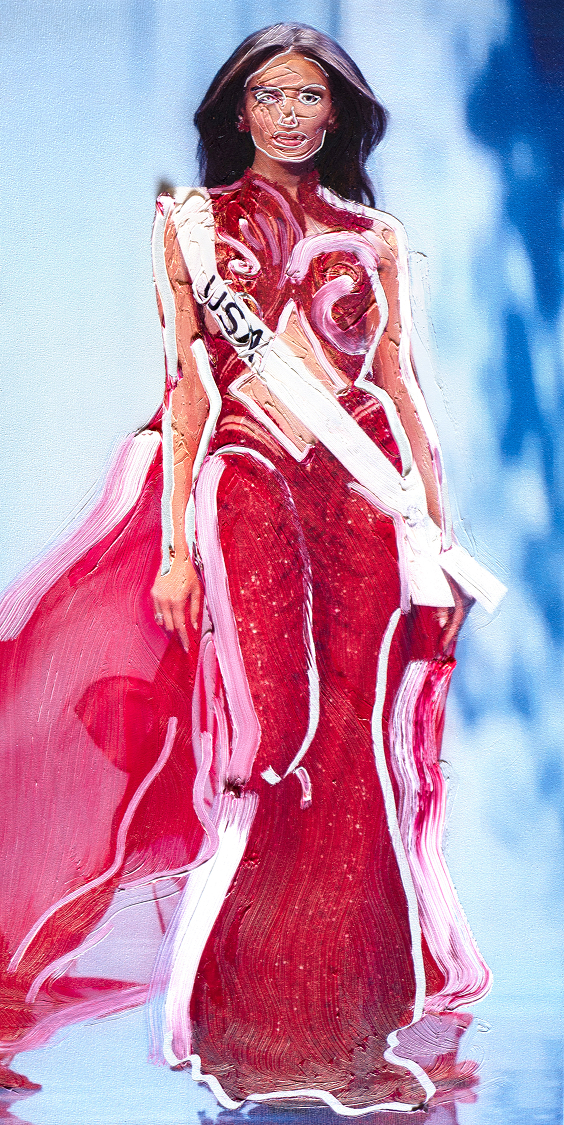
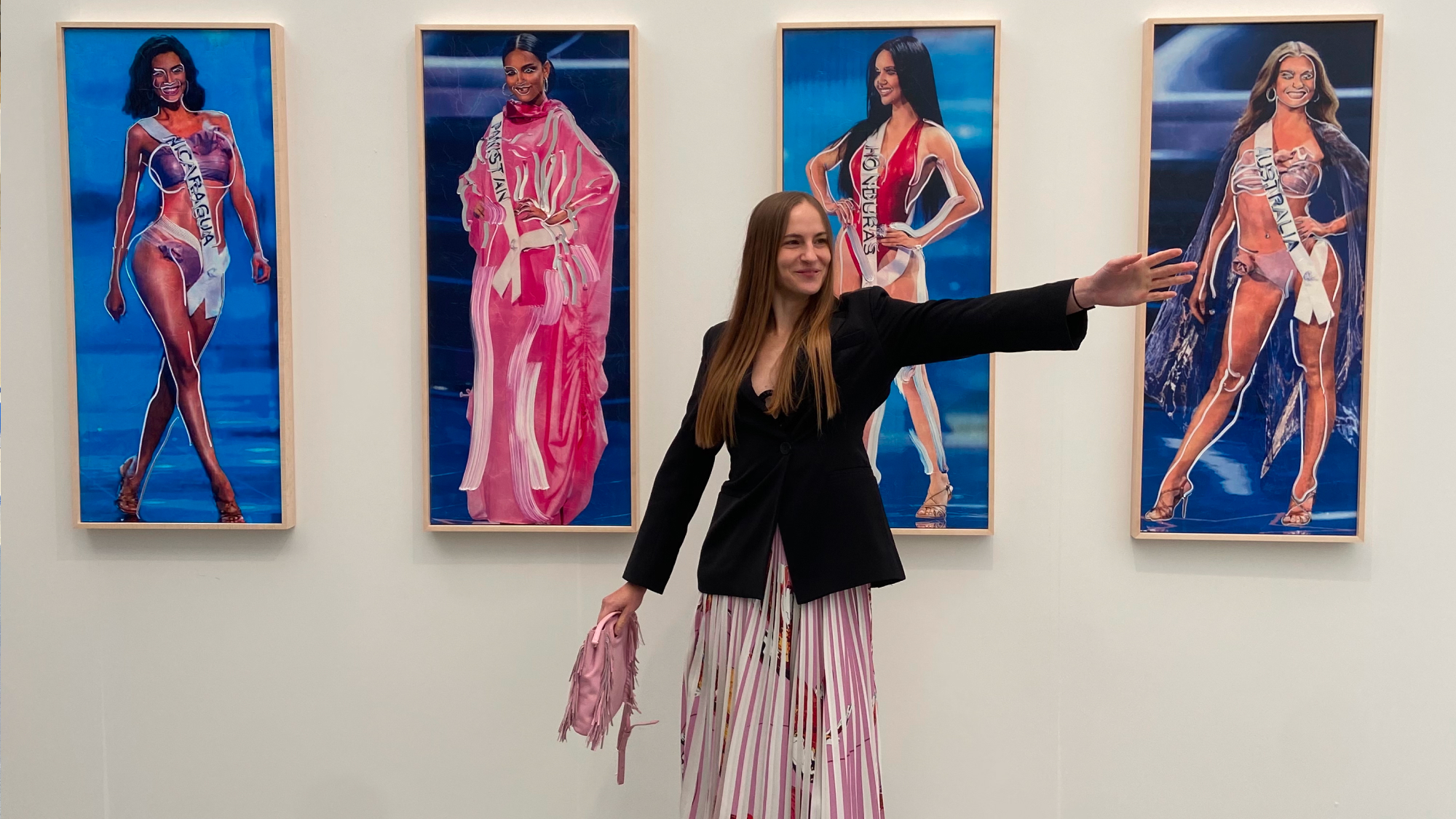
Gretchen makes this homogenization visible in Facetune Portraits: Universal Beauty (2025), a series based on images of Miss Universe contestants from different national and cultural backgrounds, all of whom have already been selected according to conventional standards of physical beauty. Gretchen puts these images through the same technical and artistic process.
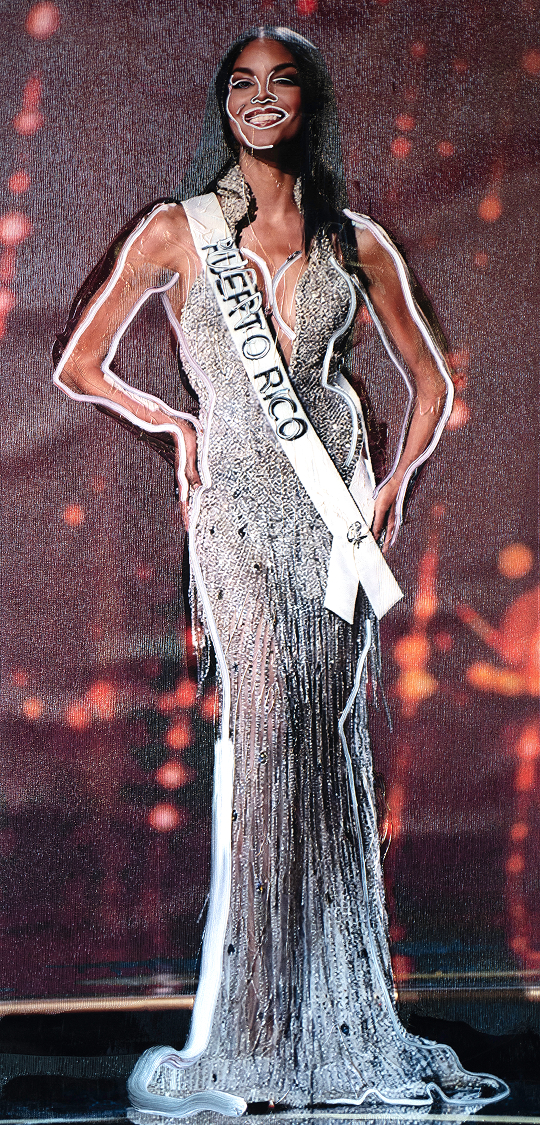
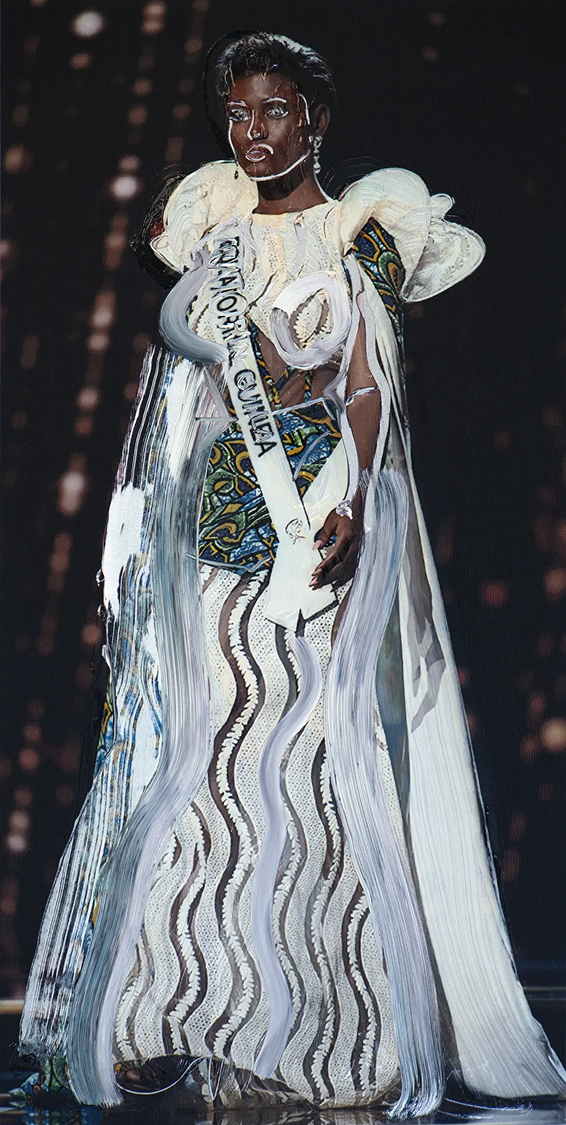
The resulting paintings show contestants on the runway, posing for the jury. Each appears in a distinct outfit, sometimes a custom-made evening gown and at other times a bikini, chosen to complement individual features and, in some cases, reflect cultural or national identity. This emphasis on individuality is reinforced through differences in color, pose, gesture, and texture, as Gretchen uses brushes and palette knives to decide what to bring forward in each portrait. Yet this uniqueness is disrupted by the white marks left by the robot. Across the series, the algorithm proposes remarkably similar adjustments: longer legs, narrower waists, fuller hips and breasts, and altered lips and eyes.
Left: Gretchen Andrew, Facetune Portrait: Universal Beauty, Puerto Rico, 2025. Oil on canvas.
Right: Gretchen Andrew, Facetune Portrait: Universal Beauty, Equatorial Guinea, 2025. Oil on canvas.
Gretchen notes that, in some instances, the algorithm also alters elements beyond the body, including the contestants’ gowns. In the case of Miss Guinea, it attempted to distort the dress by smudging the excess fabric extending beyond the body. Gretchen chose to preserve this alteration rather than correct it for visual coherence. In the portrait of Miss Pakistan, who wore a gown rather than a bikini for cultural reasons, the application attempted to accentuate her body through the fabric, making her features more visible and sexualized.
These examples suggest that the algorithm subordinates racial and cultural differences to a single idealized figure. By applying similar corrections across distinct subjects, it flattens individual features and pulls the contestants toward a shared silhouette. Differences remain visible in clothing, pose, and cultural presentation, yet the body is subjected to the same corrective logic in each case. Universal Beauty therefore reveals how beauty applications standardize women’s bodies even within a competition presented as a celebration of international diversity.
What happens when a robot materializes an algorithmic judgment?
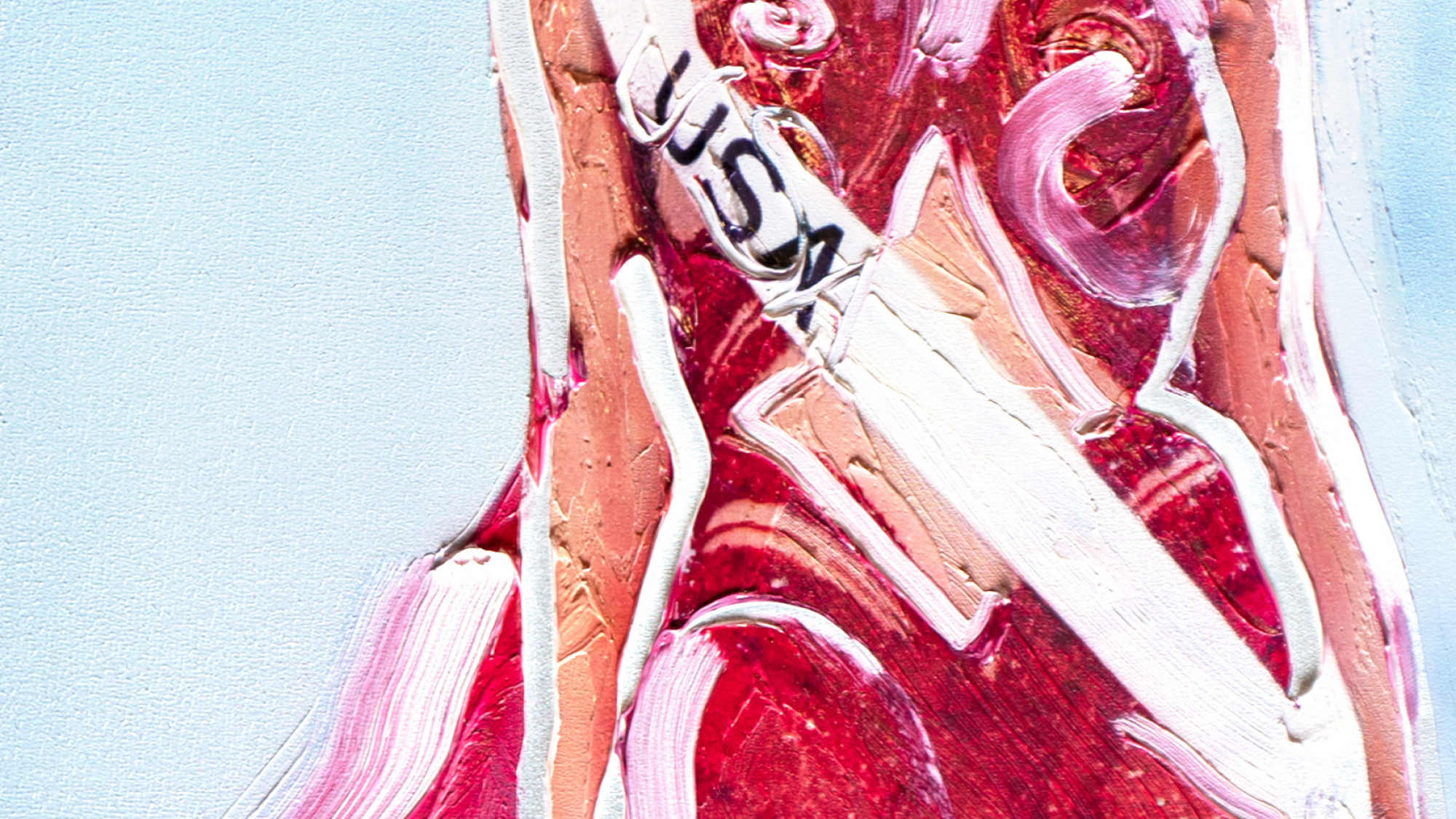
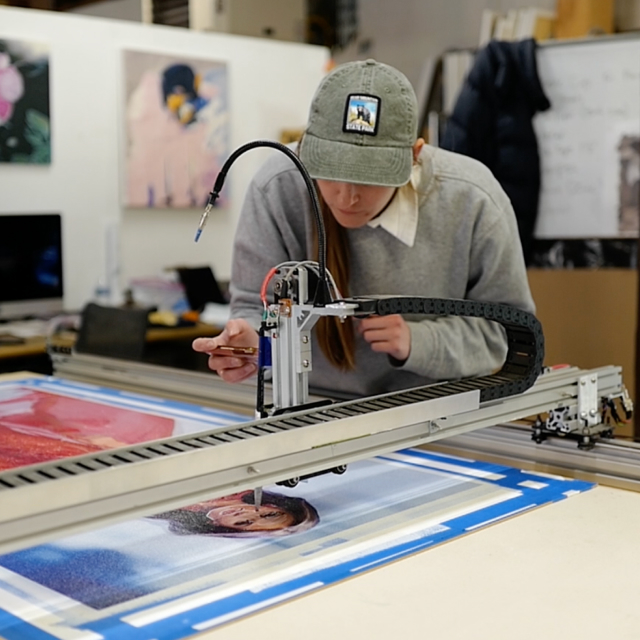
Grretchen Andrew’s artworks integrate both traditional painting and a collaboration with an XY-drawing robot. This coexistence creates a dynamic where traditional portraiture aims to capture likeness between the subject and the portrait, while the robot moves beyond resemblance and disrupts that likeness. Gretchen calls these works “portraitures of tension” or “on-canvas battles.” This dual engagement allows the real appearance of a person and its algorithmically altered version to remain visible within a single work.
Yet why does the artist choose to work with a robot, when these same marks could equally have been drawn by her own hand? Here, the robot's role in translating computational decisions into physical marks acts as a bodily extension of the application itself. Rather than merely representing algorithmic modifications, the robot materially reenacts them, making the technological intervention physically present in the production of the portrait. If Grretchen had painted these marks herself, they might have remained expressive artistic gestures. By delegating them to the robot, however, she renders the automated, procedural, and material nature of these interventions more explicit, prompting questions about where agency lies and whose decisions are ultimately being inscribed onto the represented body. At the same time, her artistic direction remains central: her choice of brush, speed, and pressure determines how each robotic line enters the painting.
As a result, these marks disrupt the underlying oil painting and render visible the corrective interventions that beauty applications would normally conceal within a smooth, enhanced result.