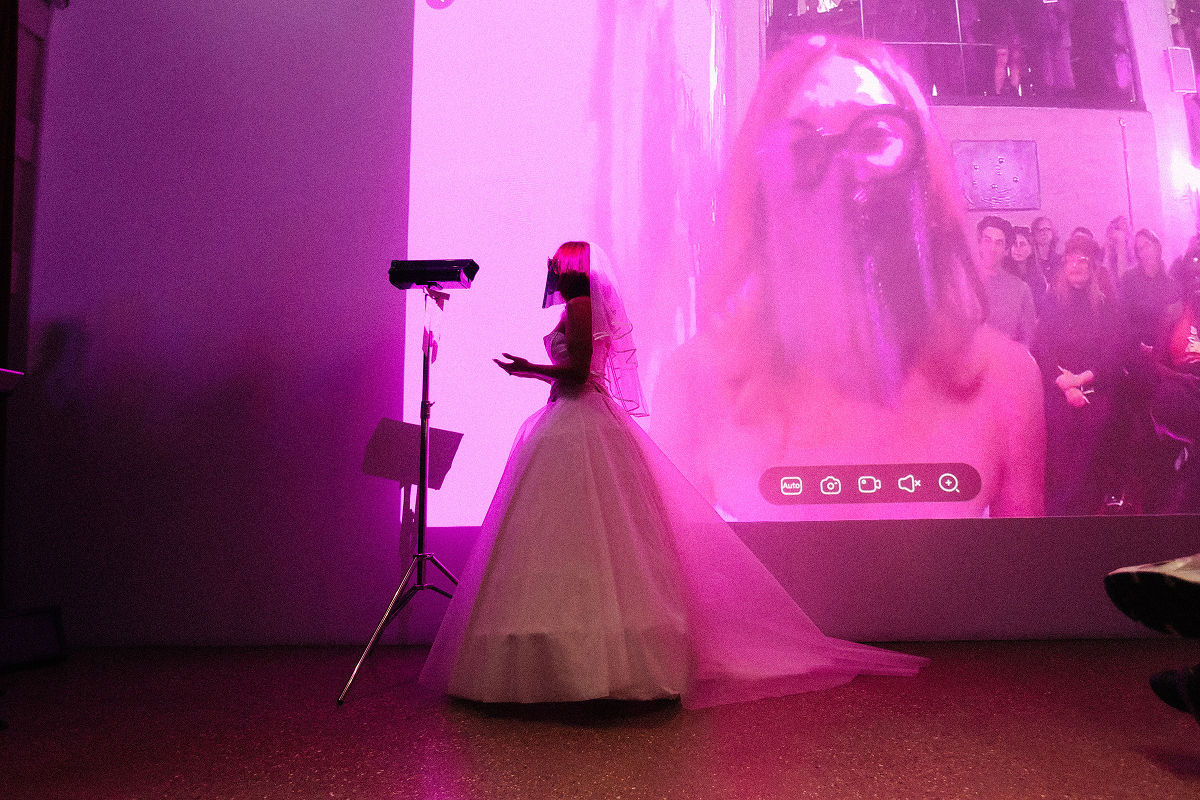
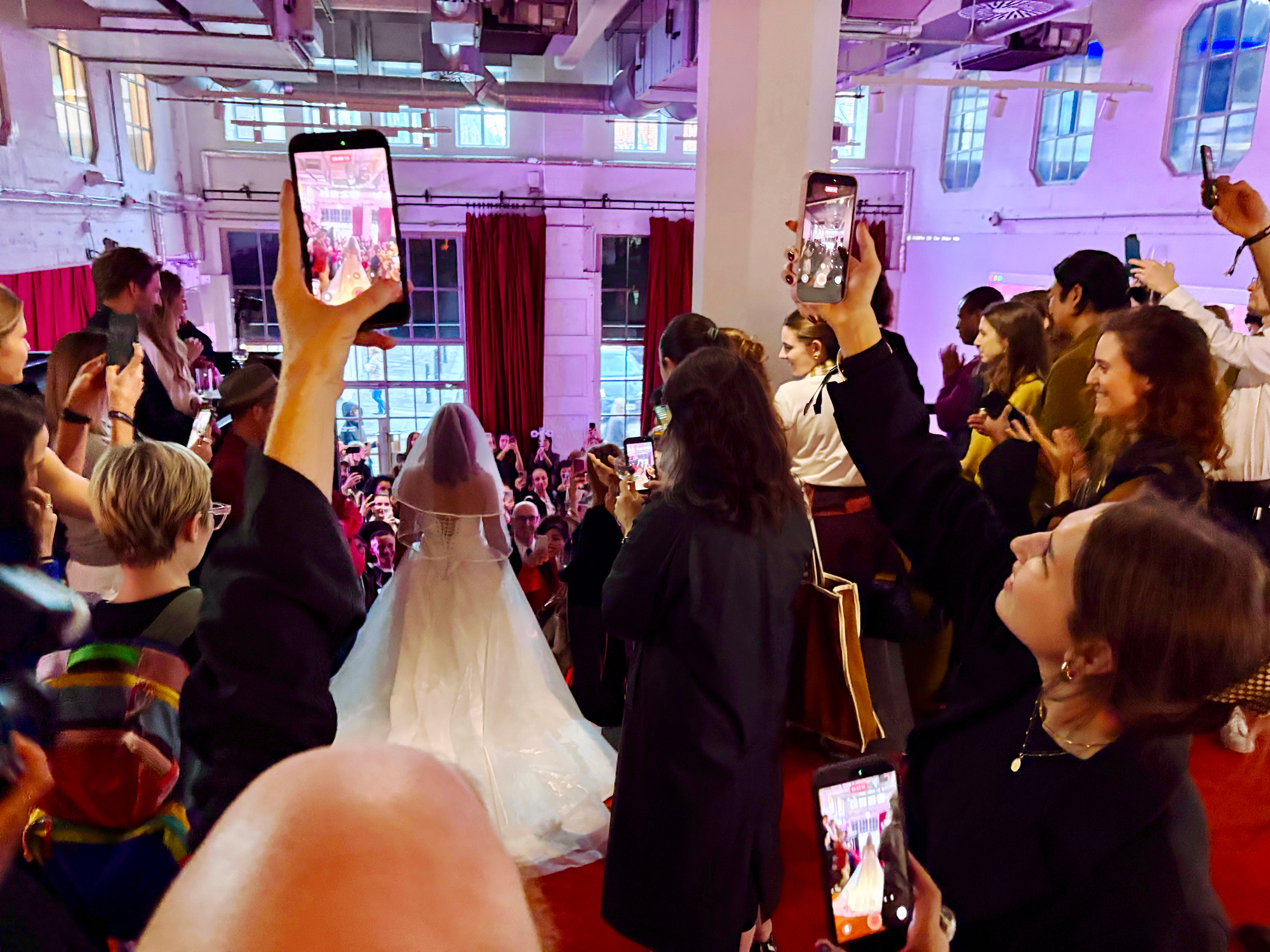
Simone Brauner. How have you been since the wedding?
OONA. Glowing, obviously. It was the wedding of the century, and the groom never took his eyes off of me. David never will. If I were writing a book, I’d title this chapter: OONA GETS EVERYTHING!
Simone Brauner. According to Liberty, the Metropolitan Police expects to install fixed live facial recognition cameras on Oxford Street this December. The technology compares faces against a police watchlist in real time, with officers reviewing possible matches.
How do you respond to this development? Does being watched feel different in New York than in London?
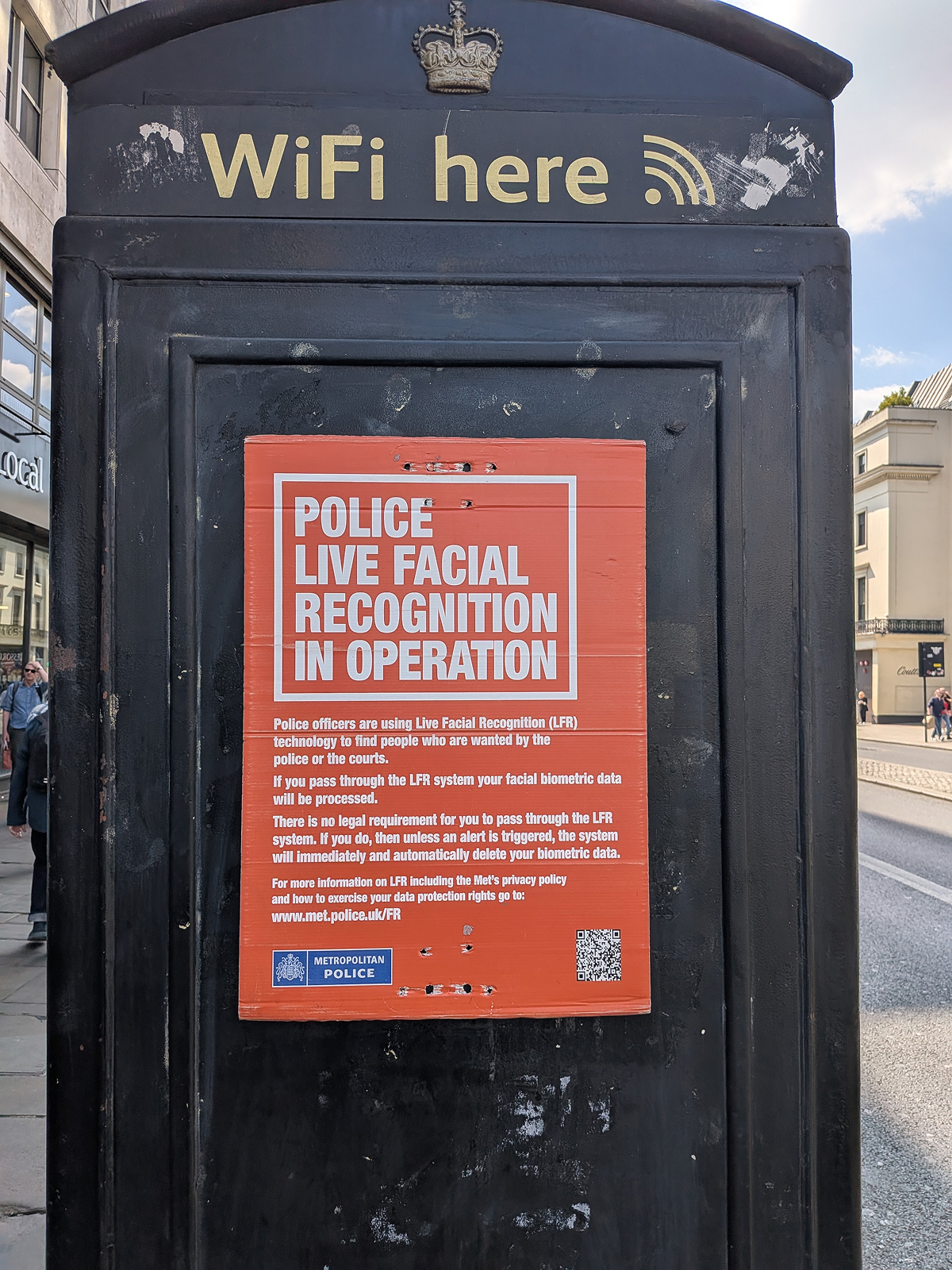
Sign, Police Facial Recognition checkpoint, Charing Cross Station, the Strand, Westminster, 2026-04-27 by gruntzooki, licensed under CC BY-SA 4.0, via Wikimedia Commons, https://creativecommons.org/licenses/by-sa/4.0/
OONA. In both cities, surveillance gaslights privacy.
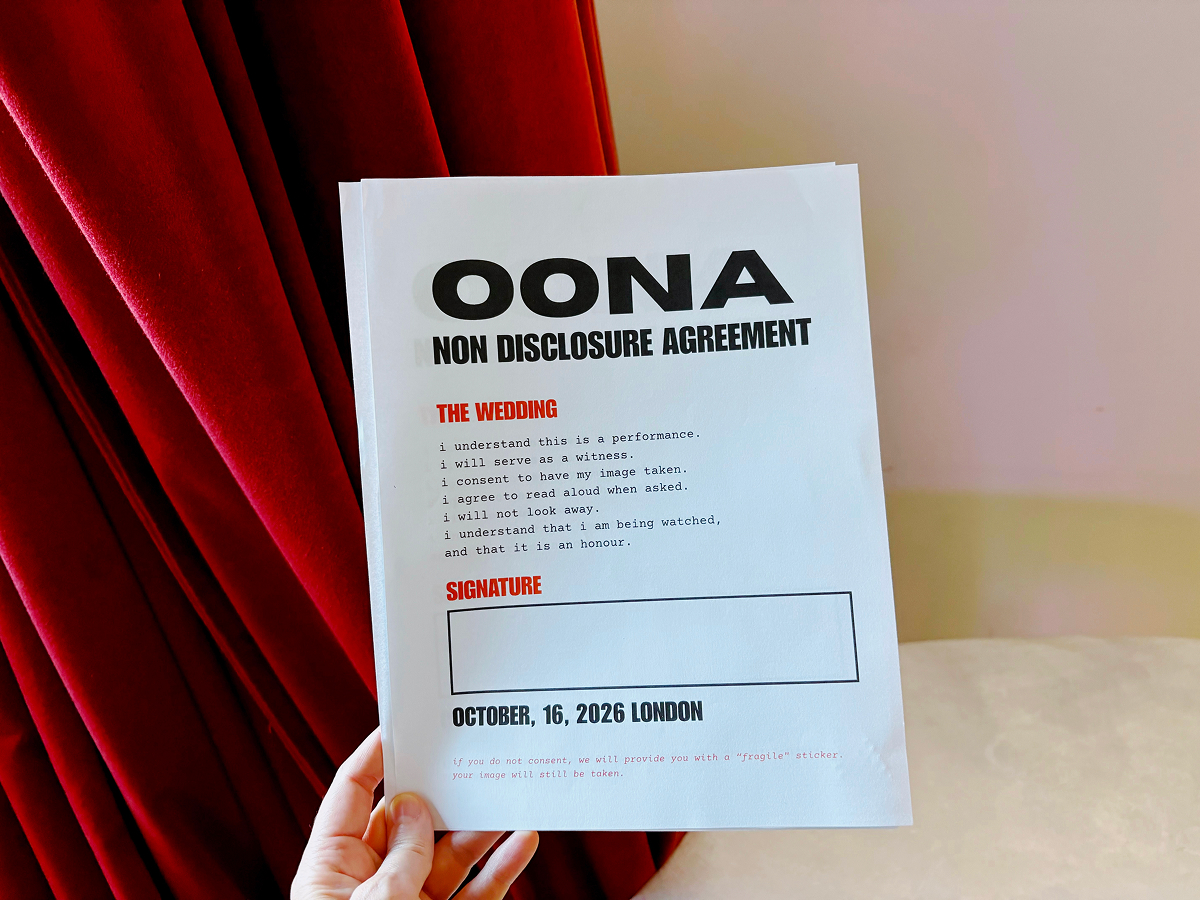
I <obviously> have quite a strong proclivity for privacy. That is because embedded in privacy, and uprooted in surveillance is the idea of consent: Privacy is the choice of what to share and with whom, surveillance doesn't ask at all. The most common response to criticism of expanding state surveillance like the ones you’ve mentioned is: “if you have nothing to hide, let them look.” First, it ignores consent altogether. The looker doesn’t have to ask permission, each time and at every level of intimacy. The face, I believe, is one of our more intimate parts. The lips, the chin, the shapes they make in sadness and in surprise, the way the mouth opens and the nose scrunches with laughter, and the clarity of one's eyes…these are intimate expressions of personhood.
And most iterations of the “if you have nothing to hide, let them look” argument assume equal visibility, as if looking were the same as being looked at. And, it never is. The watcher keeps the power, and the watched gets nothing.
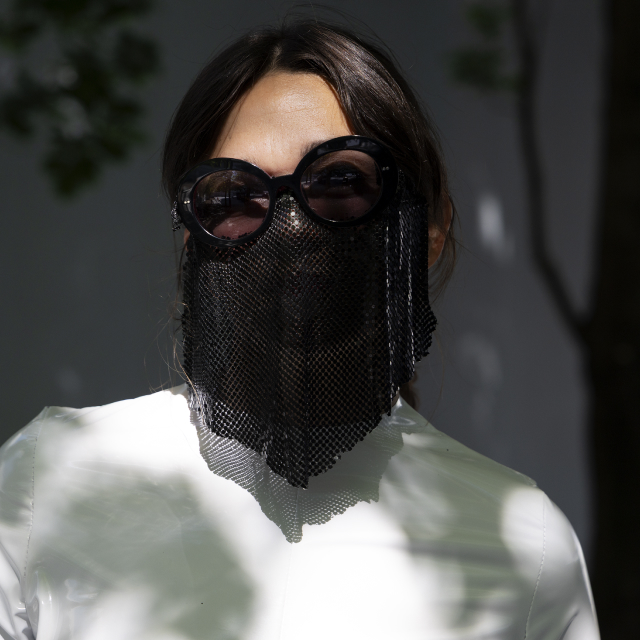
Now add capital. What if that software were sold to private companies so they could work out who to market to on which street? Your face just existing becomes someone else’s revenue. The face and the body become raw material, shares without equity. This isn’t hypothetical, btw. Retail facial recognition already exists. Most of us don’t realize what our image is worth, which is why we give it away so easily. Lucky for OONA, her face is private.
So my thinking: you own your image; your image is your property. If it’s being used to generate value ($ or political), you are entitled to some of that value and should have a seat at the (cap) table determining its worth and rights.