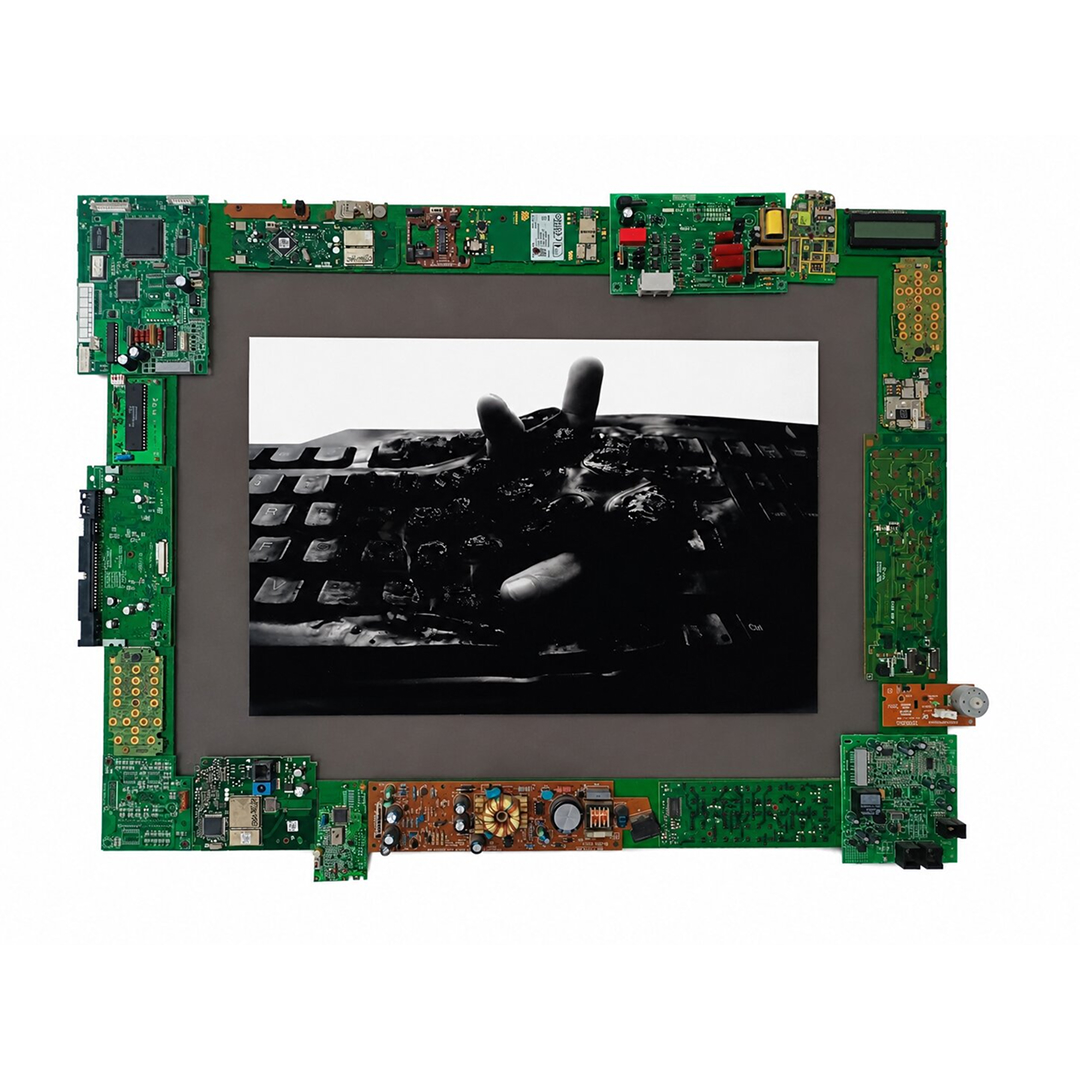
Enrico Dedin's site-specific intervention ATROPHIA looks at how AI and the digital infosphere affect attention and memory, with works including Melting Thinker and assemblages made from discarded electronics.
Enrico Dedin locates the risk in the temptation to stop exercising our own cognitive faculties, more than in AI itself. A skill that is not used tends to atrophy.
The three main works are Melting Thinker, Mirrorphones and Digital Tribalism. Alongside them are assemblages built from discarded electronic parts, among them a microchip frame holding an image from the photographic series Metamorfosi and a swing whose chains hold a keyboard in place of a seat.Two guests from outside the arts contribute to a video testimony released online alongside the exhibition: Dr Giulia Bovassi, bioethicist and associate researcher at the UNESCO Chair in Bioethics and Human Rights, and Dr Azia Maria Sammartano, a specialist in audiology and phoniatrics.
"Contemporary art and culture in general should not be considered fields of enquiry detached from reality and from other professional and working spheres," says Enrico Dedin.
ATROPHIA belongs to Backup, a project by No Default APS with Centro Culturale Candiani and M9 Museo del '900, which has invited five artists to the same windows since winter 2025. The windows can be seen day and night.