Michael Aboya, Àsìkò, John Baloy, Alexis Chivir-ter Tsegba, Delphine Diallo, Nana Frimpong Oduro, Osinachi, Melissa Simon-Hartman, and Abdulrahman Adesola Yusuf consider time as an active, layered condition. Working across photography, video, sculpture, collage, and digital practice, they examine how inherited knowledge is carried into the present.
Saiba Bayo’s exhibition text draws on the Mbari tradition of the Owerri-Igbo communities in southeastern Nigeria, where collective making is rooted in ancestral ritual and renewal.
As Bayo writes, “Nostalgia ceases to be a ‘looking back’ and transforms into a ‘reaching forward,’ while longing is not a lament for what is lost but an engine for what may be born.”
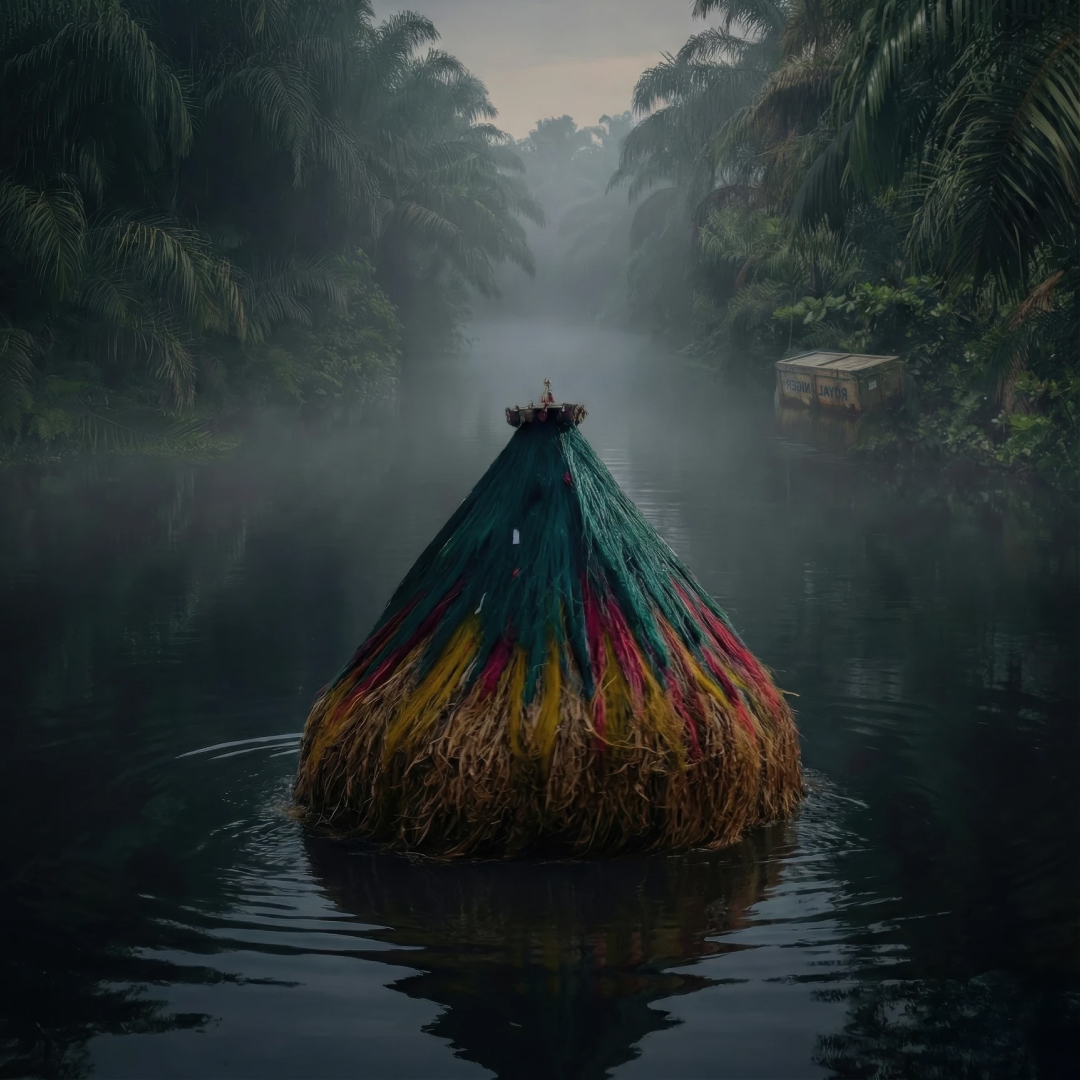
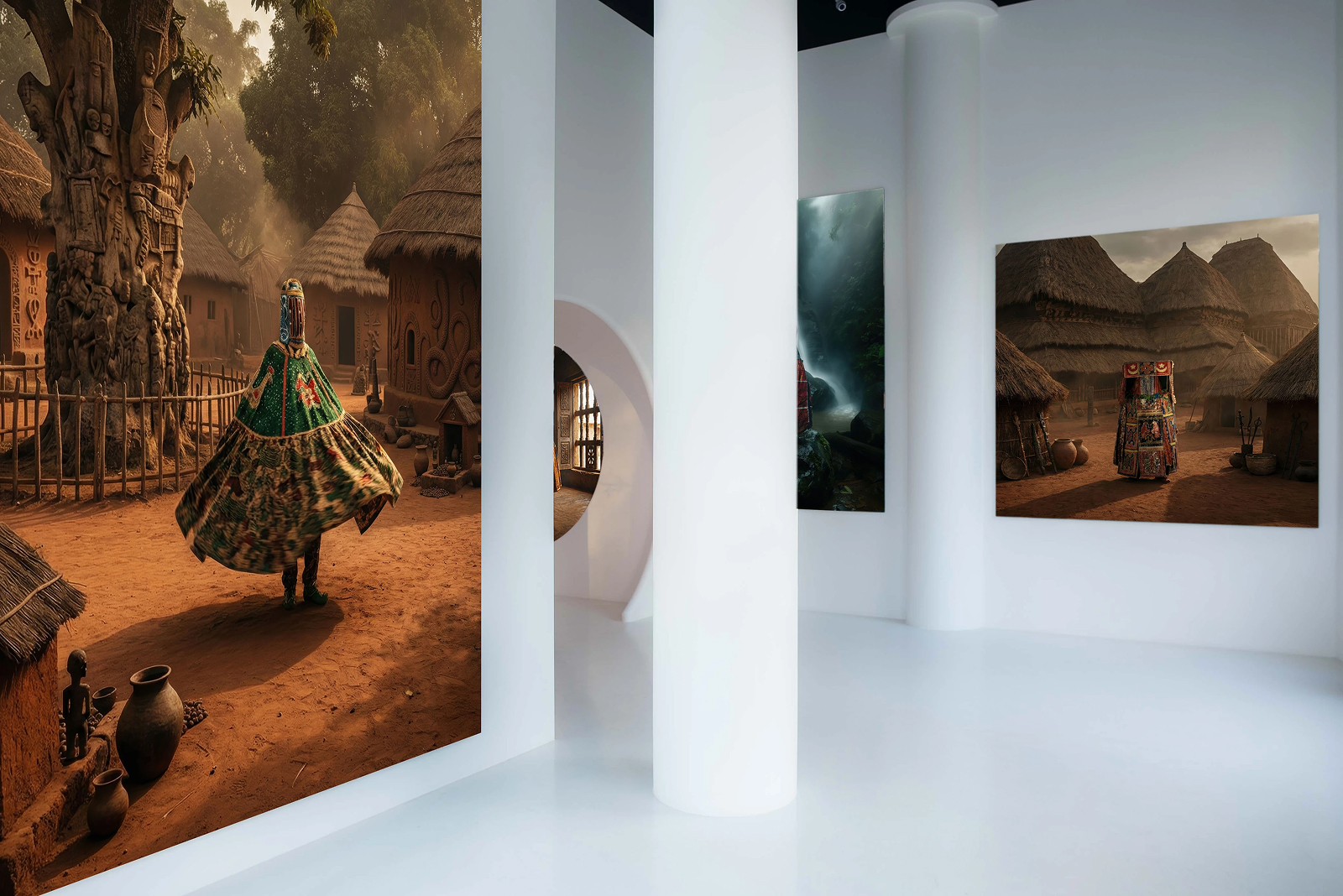
Àsìkò’s What Was Lost Between Worlds draws on the Yoruba Egúngún masquerade, an ancestral practice connecting the living with the ancestral realm. The work treats Egúngún as a living archive, asking what happens when embodied knowledge encounters colonial violence. Melissa Simon-Hartman responds through Ancestral Frequency, a sculptural costume made from hand-woven fibres, reclaimed textiles, shells, beads, and integrated lighting. Created in dialogue with Àsìkò’s work, it carries the visual language of Egúngún into a contemporary collaborative form.
Michael Aboya’s Echoes of Time turns images into portals where emotional and spiritual relations between humanity, nature, and time meet. Alexis Chivir-ter Tsegba’s collage At the Seams, Spilling brings fragments into proximity, allowing past experience and speculative futures to occupy the same frame.
Nana Frimpong Oduro’s densely populated figures engage water, earth, fire, and air as forces of ritual transformation and inner consciousness. Delphine Diallo’s Motherverse imagines a submerged realm where ancient knowledge meets future technology. Abdulrahman Adesola Yusuf redraws symbols from the public domain “as though playing Tetris,” connecting their formal logic to personal moments and economic pressures.
John Baloy’s photographs place the body at the centre of history, resilience, and transmission. Osinachi uses Microsoft Word’s vector tools to construct domestic interiors and Afrofuturist scenes, where pixelated fills become a language for Black skin, vulnerability, and everyday pattern.