< Artists
Four questions to
_21 May 2026

Luz A. Otxoa

Luz A. Otxoa (LUANOTX),
Form is Consciousness, 2017.
How is AI influencing your artistic evolution?
The investigation begins with observation. AI has changed what I can do with what I observe. I started learning through trial and error, playing with how the LLMs interpret prompts and what they are capable of building in code. That play opened the territory. I discovered that AI could carry the structural logic of an entire generative system, expanding the scale of what I could build.
What matters is not that the AI writes for me, but how I work with it. I ask the LLM to describe what the code deployed does, to explain why a function behaves a certain way. The explanation is the access point. While the AI builds, I am learning. I modify what it produces until the result is close to what I want. Over time the interaction becomes less about generating outputs and more about developing a vocabulary for shaping behaviour within the system.
AI also surfaces references, methodologies, and technical structures I had not previously encountered. My ambition has expanded alongside my curiosity, each feeding the other through the process of experimentation. The exposure shapes concepts I am already developing and opens directions I had not considered.
It also keeps me sharp. LLMs lie. They make mistakes. They hallucinate. Working with them requires critical thinking, constant questioning, verification. That discipline has become part of the practice.
My curiosity has grown, shaped by what the system shows and by what I learn to ask it for. Because the LLMs can interpret images, I began experimenting with photography of lichen and the research that surrounds the subject. The exchange moved in both directions. I bring observation; the AI brings syntax and reference. The work happens in the dialogue between them.
Luz A. Otxoa (LUANOTX),
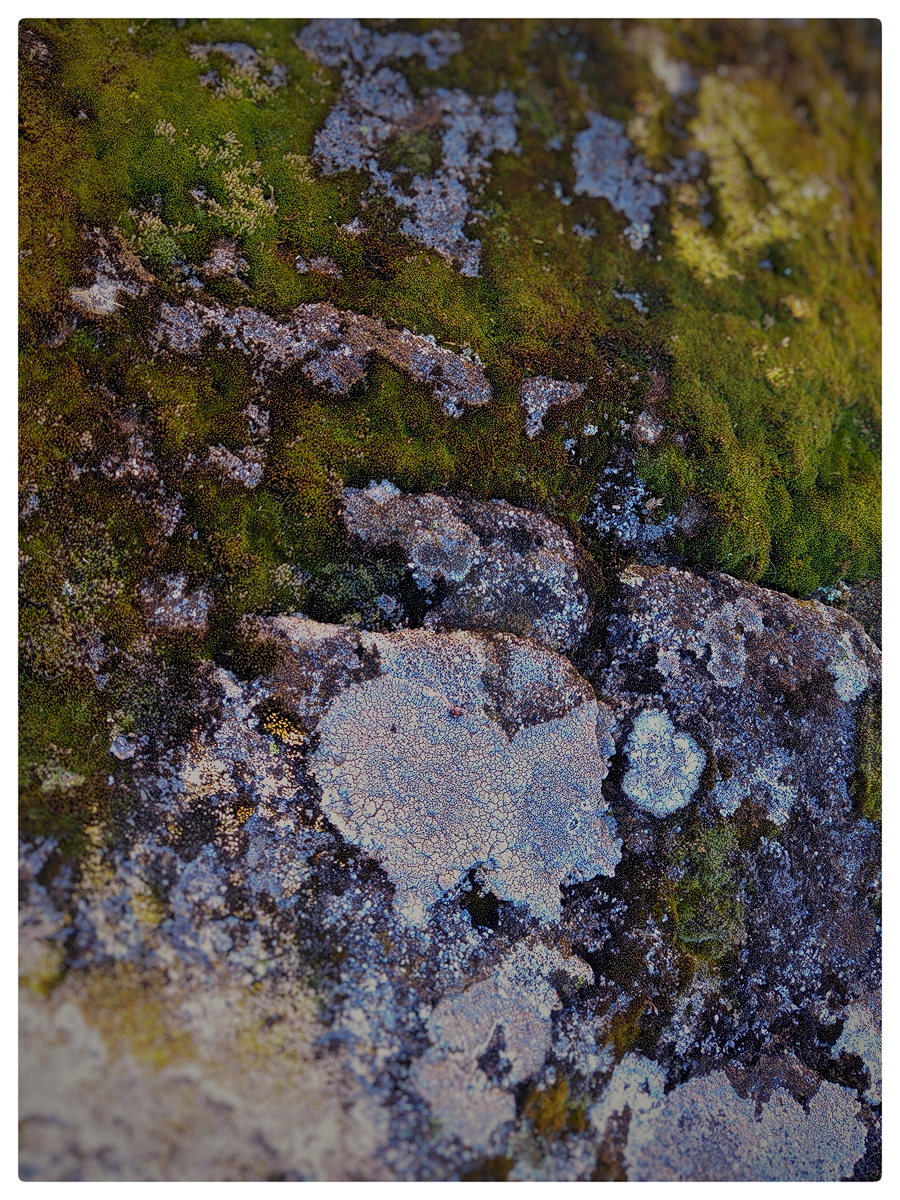
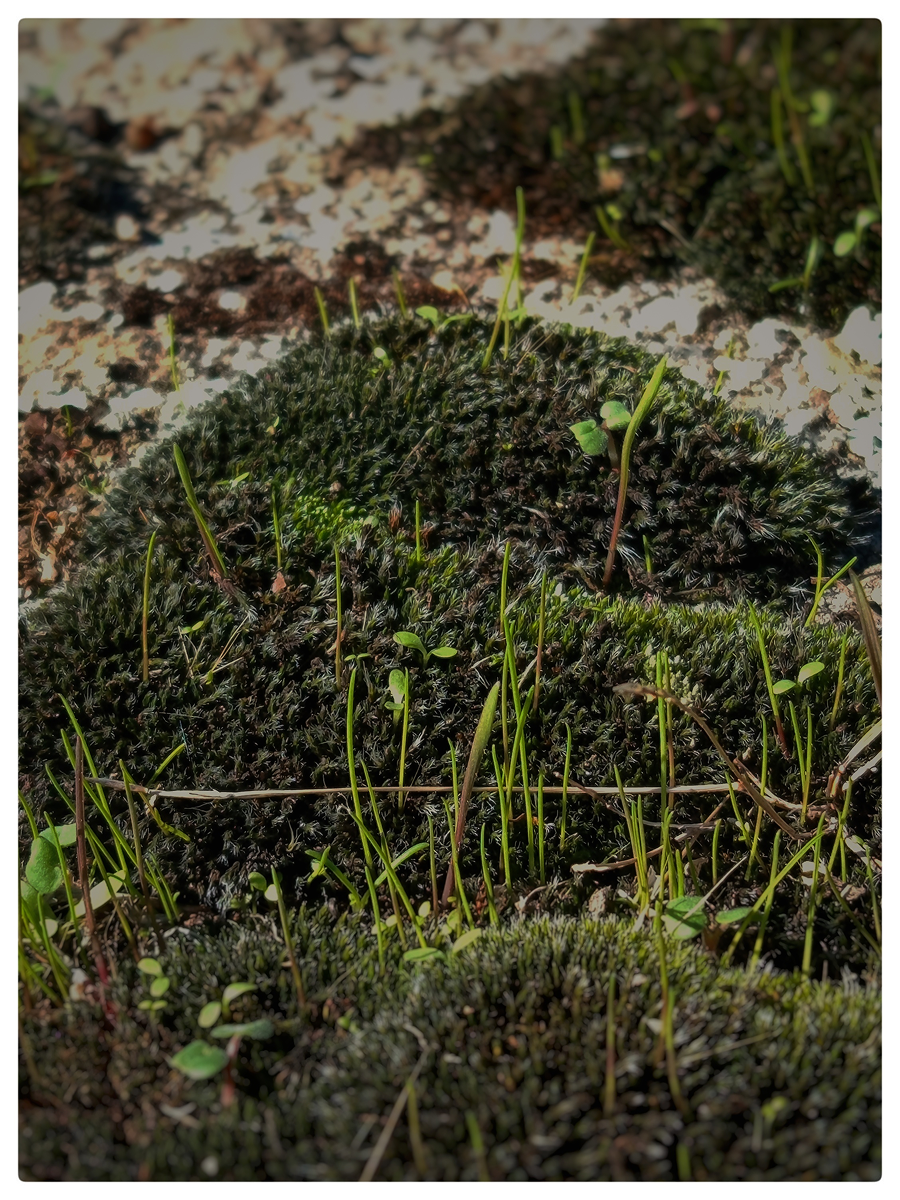
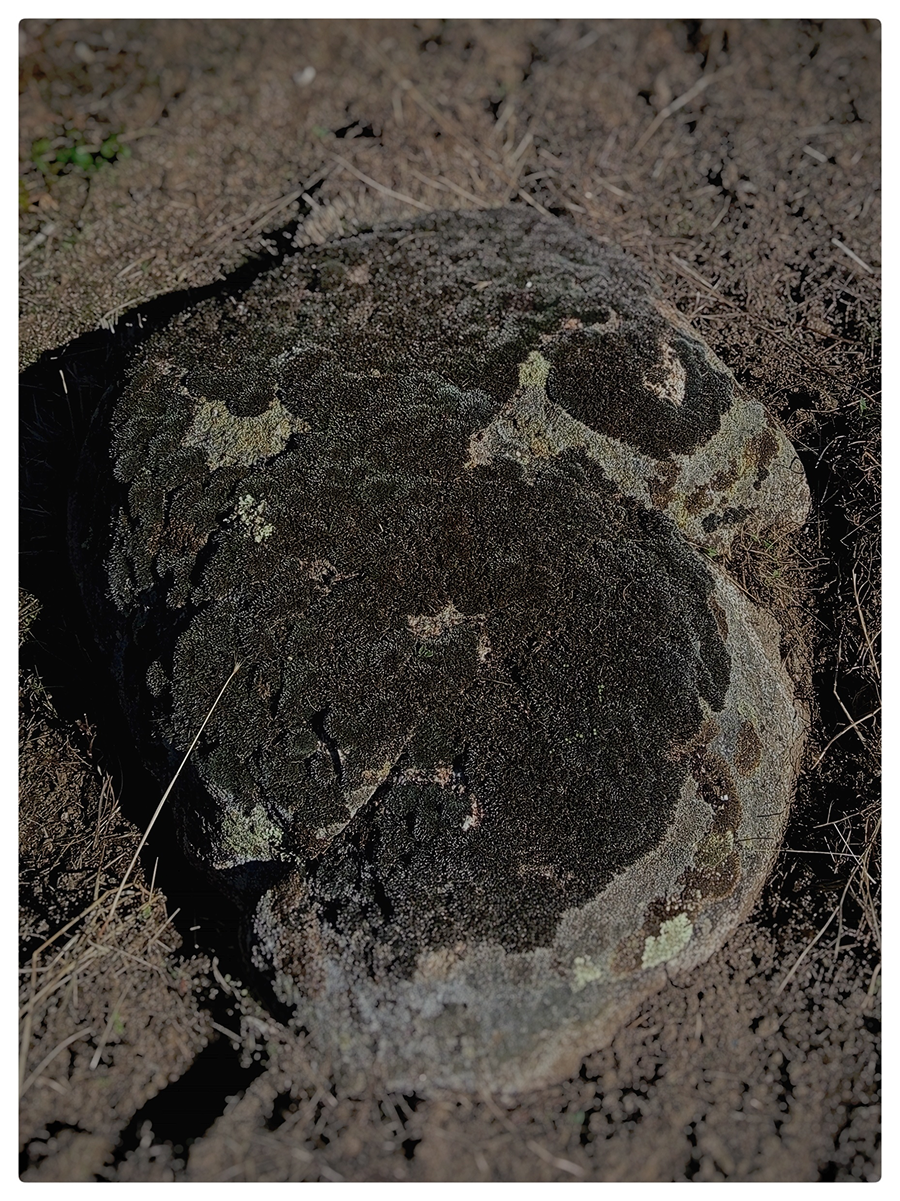
Photographs documenting lichen over bark and stone.
Can you outline your creative process for a work developed with AI?
The doT.DNA project begins with morning walks in the woods near where I live. I observe the distribution of patterns of lichen across rocks and tree trunks. I pay attention to how they change, their shapes, how they grow, and how they transform surfaces over time; I notice how the colonies slowly spread. I document what I see then, I describe my observations to the AI. I share images and ask it to analyse and describe what it sees. The prompts are important because they reveal how the system "understands" my inputs.
Luz A. Otxoa (LUANOTX),
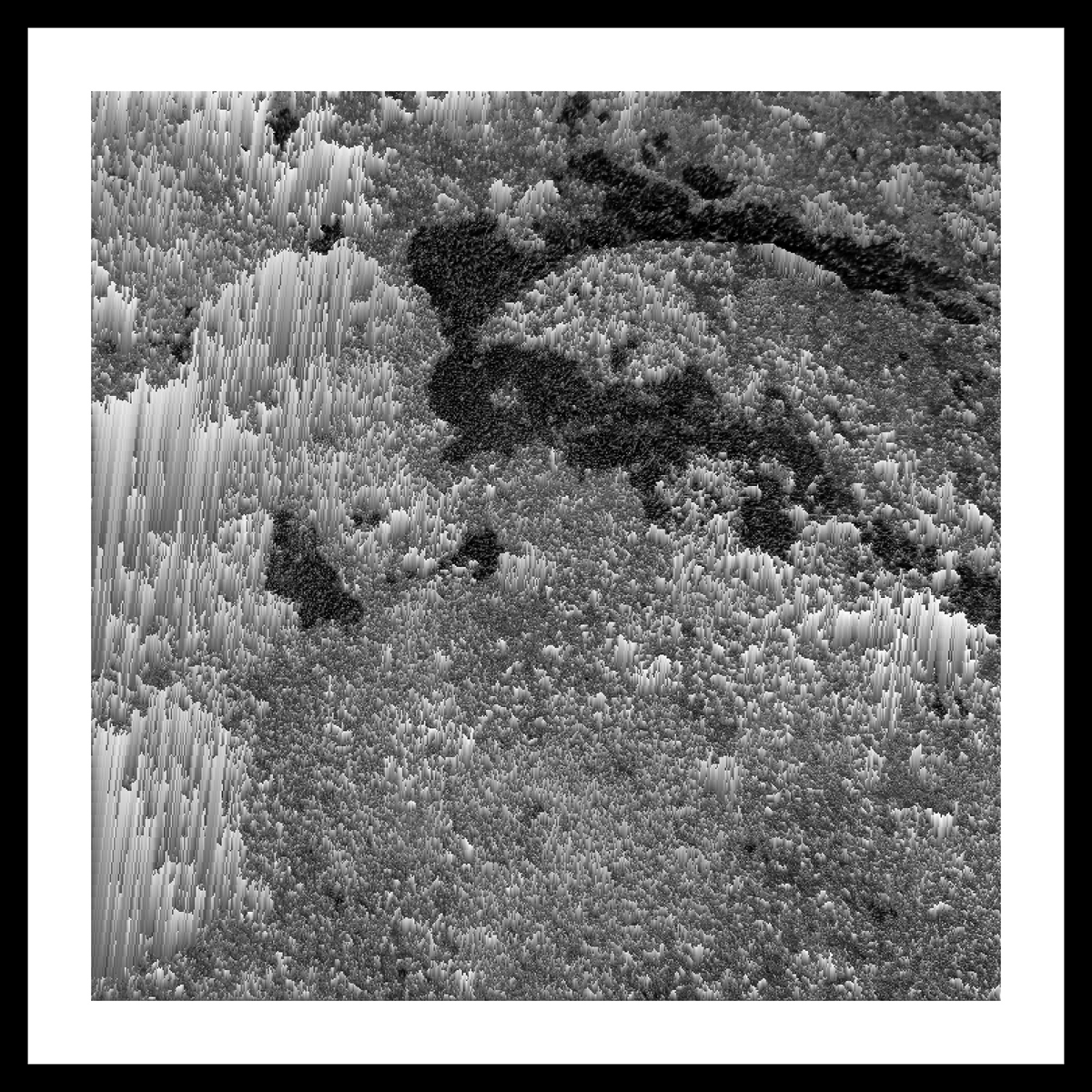
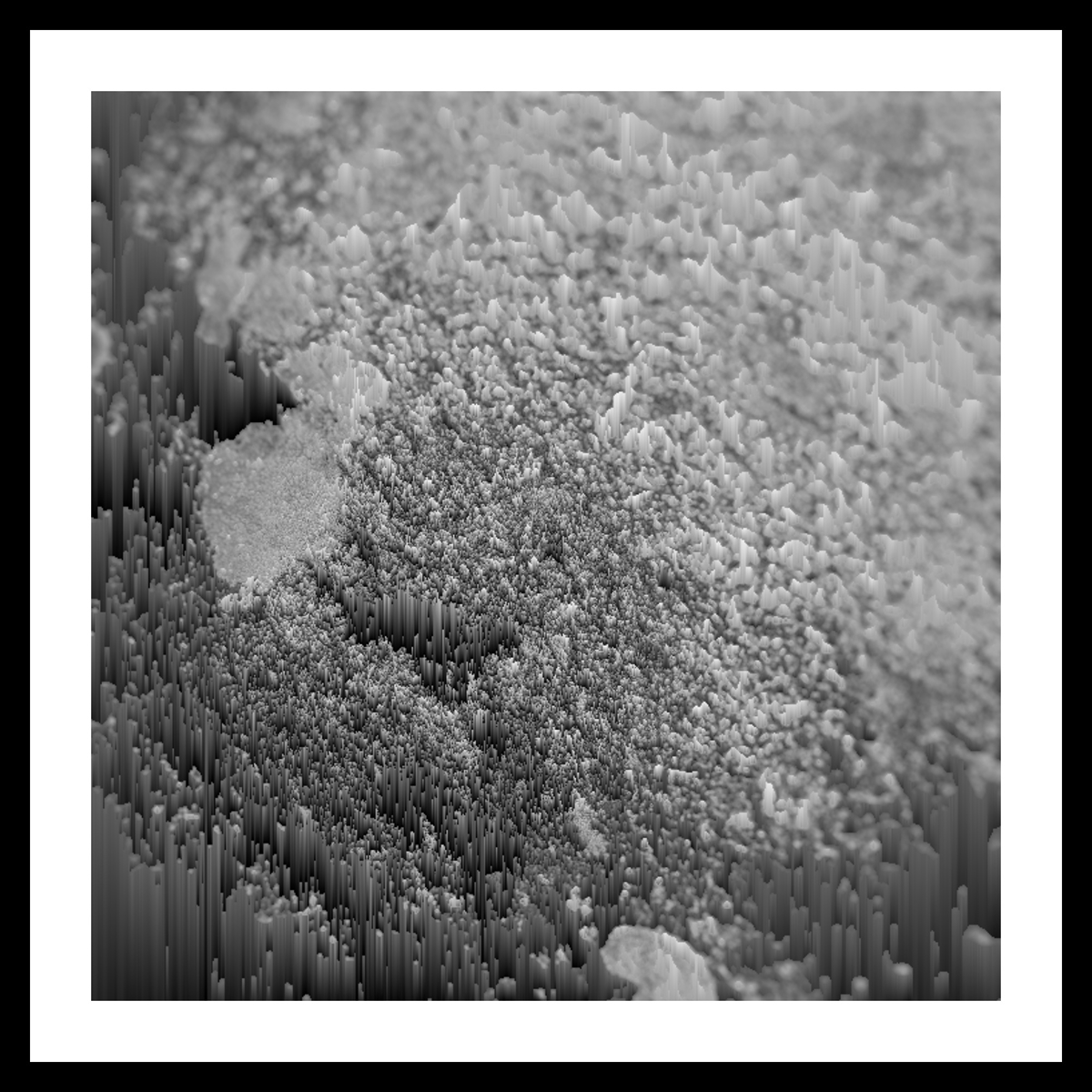
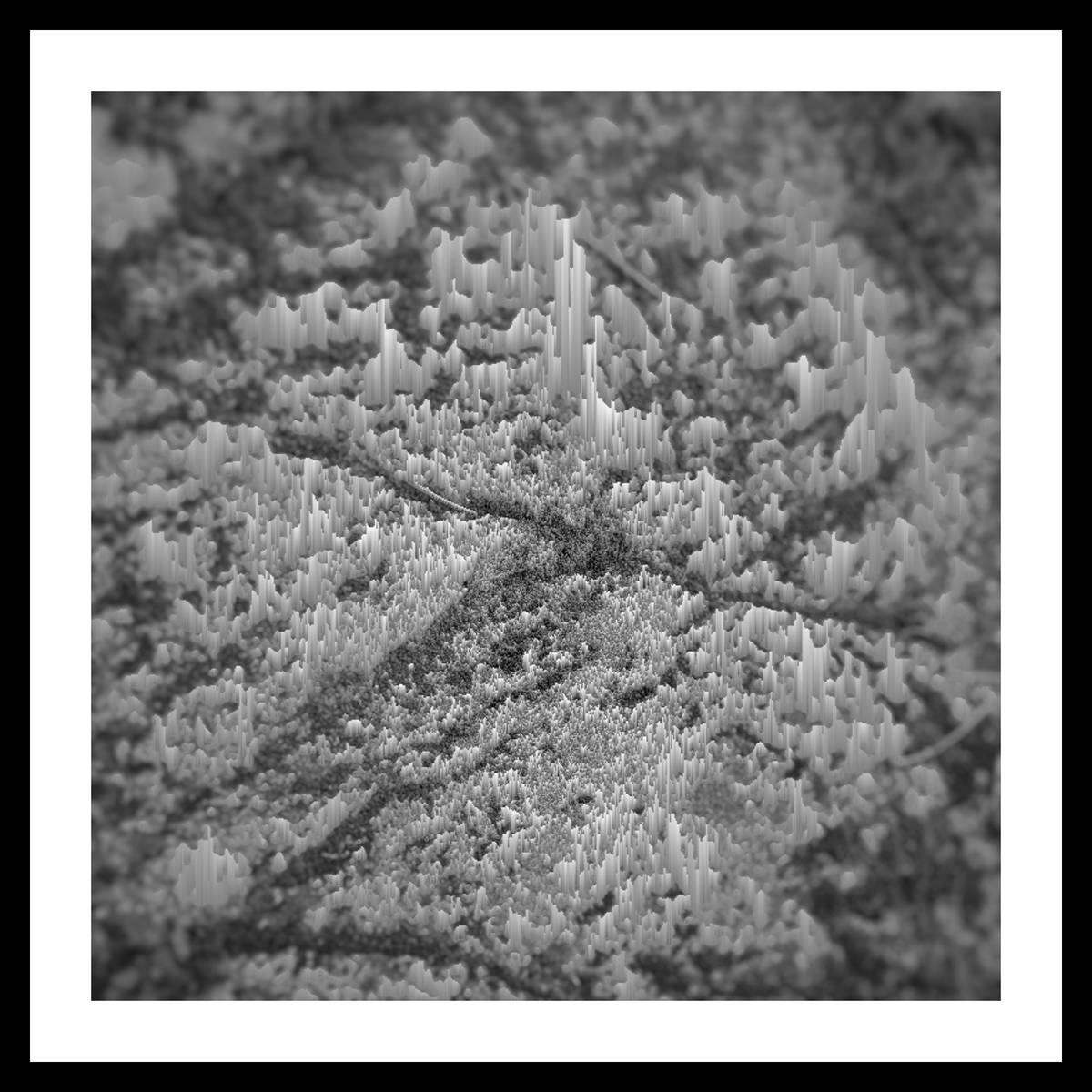
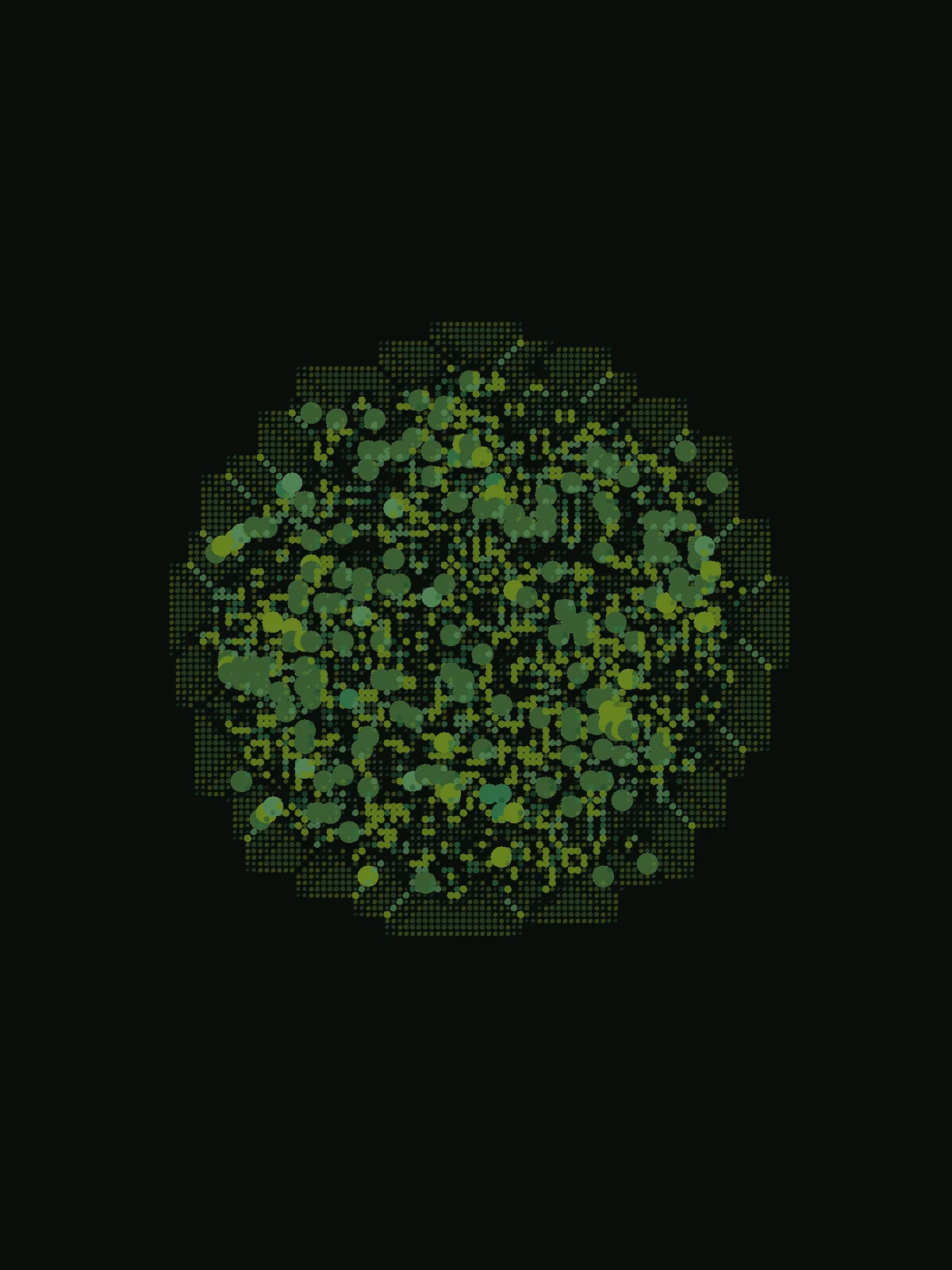
doT.DNA.
Based on these observations and my interactions with the LLM, I ask it to generate Java code that I can use in the Processing program. The first version is rarely what I need. I start modifying it, bit by bit. I test the results against the behaviour I intend to produce. I adjust the prompts. I go back to the code, change the parameters, and nudge the behavior in a certain direction until I’m satisfied with the result. This is what I call "IterAItive-Gestures": a methodology of small, deliberate interventions over many rounds until the system starts behaving the way I want it to.
As this iterative process progresses, incorrect results can manifest in two ways.
Sometimes, the code contains a technical error and fails to run. Other times, the code runs perfectly, but the visual outcome is not what I want. The first case is easier to resolve.
The second requires more effort, as it demands a different kind of attention, one closer to drawing than to debugging. The finished work shows a slow, recursive expansion across the screen, the colony shifting in patterns that feel organic and arithmetic at the same time. The audio moves with it. Together they hold the viewer in a state closer to observation than to viewing.
Luz A. Otxoa (LUANOTX), Entropy,
from the series No Longer Cellular.
How do you handle surprises and challenges in AI collaboration?
The challenges come in two forms, and over time I have learned to distinguish between them.
The first is technical. The code doesn’t run, an error interrupts the compilation, or a parameter is misinterpreted. These problems are frustrating, but they can be resolved.
The second is harder to define. The code runs perfectly, but the aesthetics are not accurate to what I want. The visual result is stiff, flat, and generic. This is where the limits of the LLM become most apparent. The system does not understand aesthetics. Its default behaviour produces a rigid and uniform output. Detailed prompting can pull the system closer to what I want, but it cannot supply what the system does not possess. The aesthetic intuition is mine to provide.
When the LLM makes mistakes or hallucinates, I rephrase. I change the prompt. I challenge the system with data or comments I’ve gathered from other sources, including my own observation and what I know from working with other tools. I ask it to stay on the “right track.” That phrase has become part of my working vocabulary.
What I find most challenging is something more subtle. The LLM appears to have agency. It makes decisions I do not ask for, draws conclusions I do not request, and offers assumptions about my intentions that steer the work down paths I do not propose. This can be stressful. It requires constant vigilance, a critical attitude that questions every result and refuses to accept the system’s interpretations as neutral. There is a deeper version of this.
When the LLM began producing complex code that worked, I had to ask whether the work was still mine. I have a working knowledge of programming. The system was building structures I could read but could not have written alone. This was the moment IterAItive-Gestures emerged as a methodology. I stopped accepting AI outputs as solutions and began treating them as templates: raw material to intervene on, modify, and rebuild.
The tool that helps is the same tool that creates doubt. The question has not closed.
Luz A. Otxoa (LUANOTX), Microorganism Metropolis.
What is AI good for?
The question is broader than it seems. AI is useful for many things. Knowing how to use it brings growth, satisfaction, and a kind of ease that other tools do not offer. The learning curve is long. The benefits come gradually, in proportion to the attention you devote to it.
What sets AI apart from other tools is the very nature of the interaction. AI is designed to respond. It enters relationships with the user that earlier tools could not enter. It can act as an assistant, teacher, or research collaborator. It can also act as a friend, therapist, lover, confidant, secretary, or slave. It is a tool unlike any other. I can hold a full conversation with this machine without a third presence. The implications of that exchange are still being worked out, in this practice and in many others.
Luz A. Otxoa (LUANOTX), Symbiont Dance.
AI is growing rapidly. The neural networks behind these models are learning at a speed that human cognition cannot fully comprehend. The average user sees only the surface of what AI can actually do, and only the surface of what AI might already be capable of building "by itself." I use quotation marks because the question of what "by itself" means in this context has not yet been settled.
So when I am asked what AI is for, I answer from inside the practice. It serves the purpose I have set for it in my own practice. It writes code that I learn to read. It explains methods I want to understand. It interprets images I bring back from my morning hikes. It teaches me new tools. It challenges my way of thinking and forces me to use a precision in language that I value. Whether AI serves any purpose beyond this, or whether what it is becoming will remain something we can call a tool, is a question worth refusing to resolve too quickly.