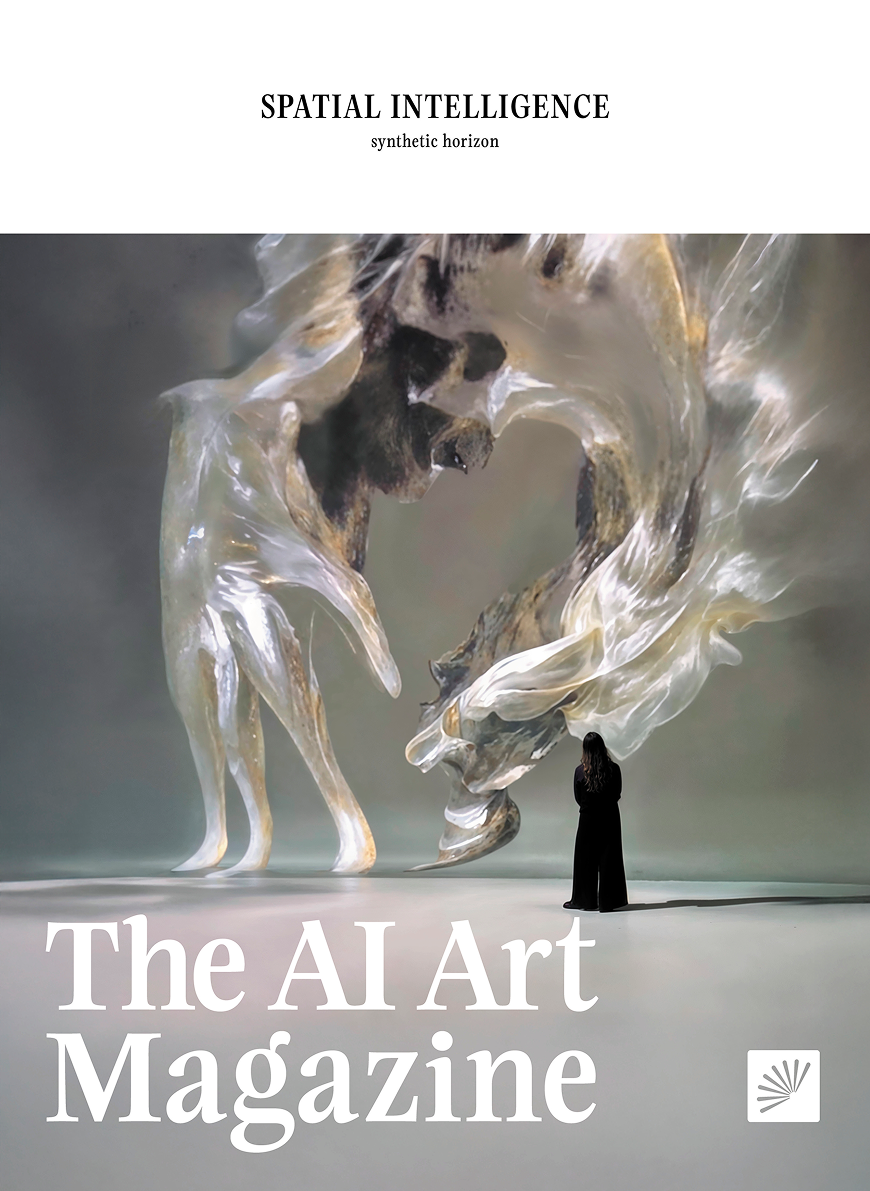
A one-day program across multiple screens at Load Gallery in Barcelona, inviting you to immerse yourself in works from the latest edition SPATIAL INTELLIGENCE—synthetic horizon.
Sun, Apr. 19, 2026
2 PM – 8 PM
Load Gallery
Carrer Llull, 134,
08005 Barcelona,
Spain
register here
The AI Art Magazine, SPATIAL INTELLIGENCE-synthetic horizon, Cover by Sougwen Chung: Body Machine (Meridians), 2025. In conversation with Anika Meier.

Program

_screenings + talks

0 2 : 0 0
< D O O R  O P E N >
0 2 : 3 0
Welcome
Load Gallery & The AI Art Magazine
0 3 : 0 0
Screening I
​Introduction and live remarks by Marlon Lionel Staub
​Screening of works by
Marlon Lionel Staub
Tyrone Williams + Kenta Cobayashi
Stella Particula
Ian Haig
0 3 : 3 0
Screening II
​Introduction and live remarks by eeezeen
​Screening of works by
eeezeen
0009
Benjamin Bardou
0 4 : 0 0
Talk
​​Iason N. Paterakis on q.GOO
0 4 : 3 0
Screening III
​Introduction
Screening of works by
transLAB + n-D::StudioLab
love0destroy
Albertine Meunier
0 5 : 0 0
Panel
​Sofia Bastidas Vivar in conversation with Jaime Reyes
0 5 : 3 0
Screening IV
​Introduction
​Screening of works by
Jaime Reyes
Ouchhh
Angela Ferraiolo
0 6 : 0 0
Screening V
​Introduction
​Screening of works by
Josue Ibanez
Sasha Stiles
Jason Scuderi
0 6 : 3 0
Talk
​Tatiana Halbach (Desilence) on Paramnésico
0 7 : 0 0
Screening VI
Paramnésico
0 7 : 1 5
Screening All Works
0 8 : 0 0
< T H E  E N D >
< T H E  E N D >
< T H E  E N D >
< T H E  E N D >
< T H E  E N D >

Artworks

_Screening

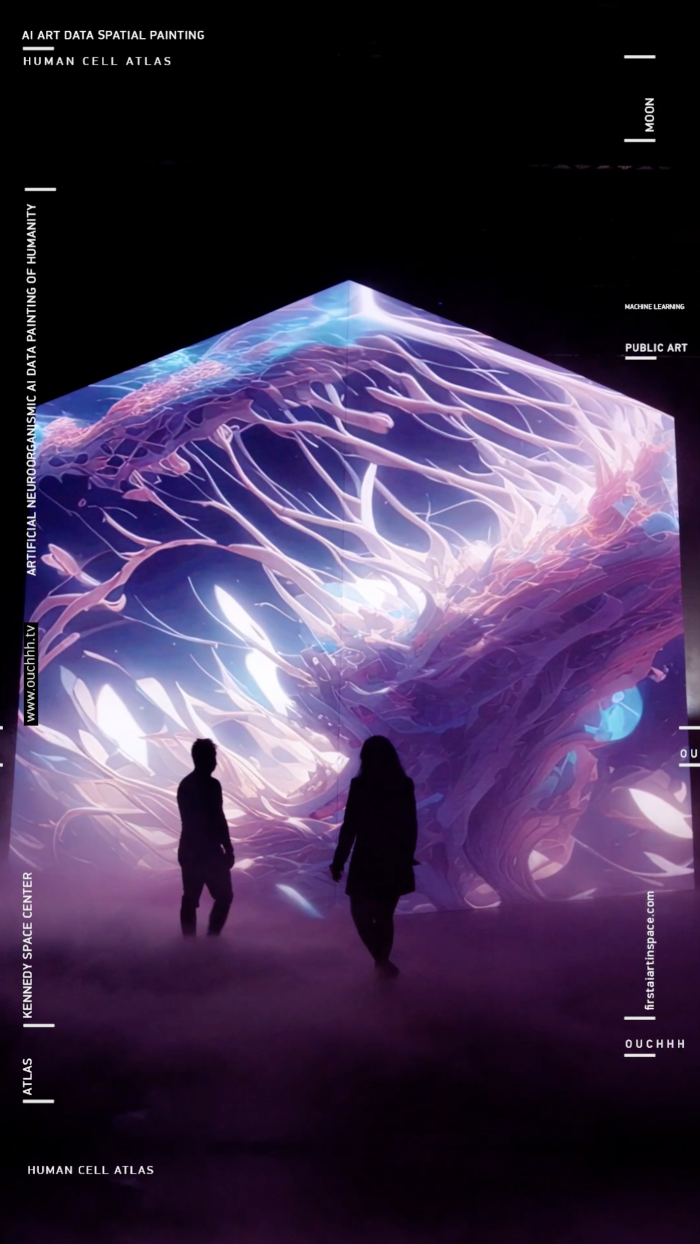
Ouchhh, Human Cell Atlas.
Ouchhh
_TUR
ouchhh.tv
Human Cell Atlas
OUCHHH is a data-driven art and technology studio founded by Ferdi Alici and Eylul Duranagac. Working at the intersection of artificial intelligence, immersive installation, and moving image, the studio transforms large-scale data sets into spatial and sensory environments. Their practice treats data as a painterly medium, using AI and algorithms to reveal structures and patterns that exceed the limits of human perception.

Over more than a decade, OUCHHH has developed large-scale works for institutions, cultural venues, and public spaces internationally, with presentations at major festivals and exhibitions worldwide.
Sasha Stiles, A Living Poem, generated still, 9 April 2026
Sasha Stiles
_USA
sashastiles.com
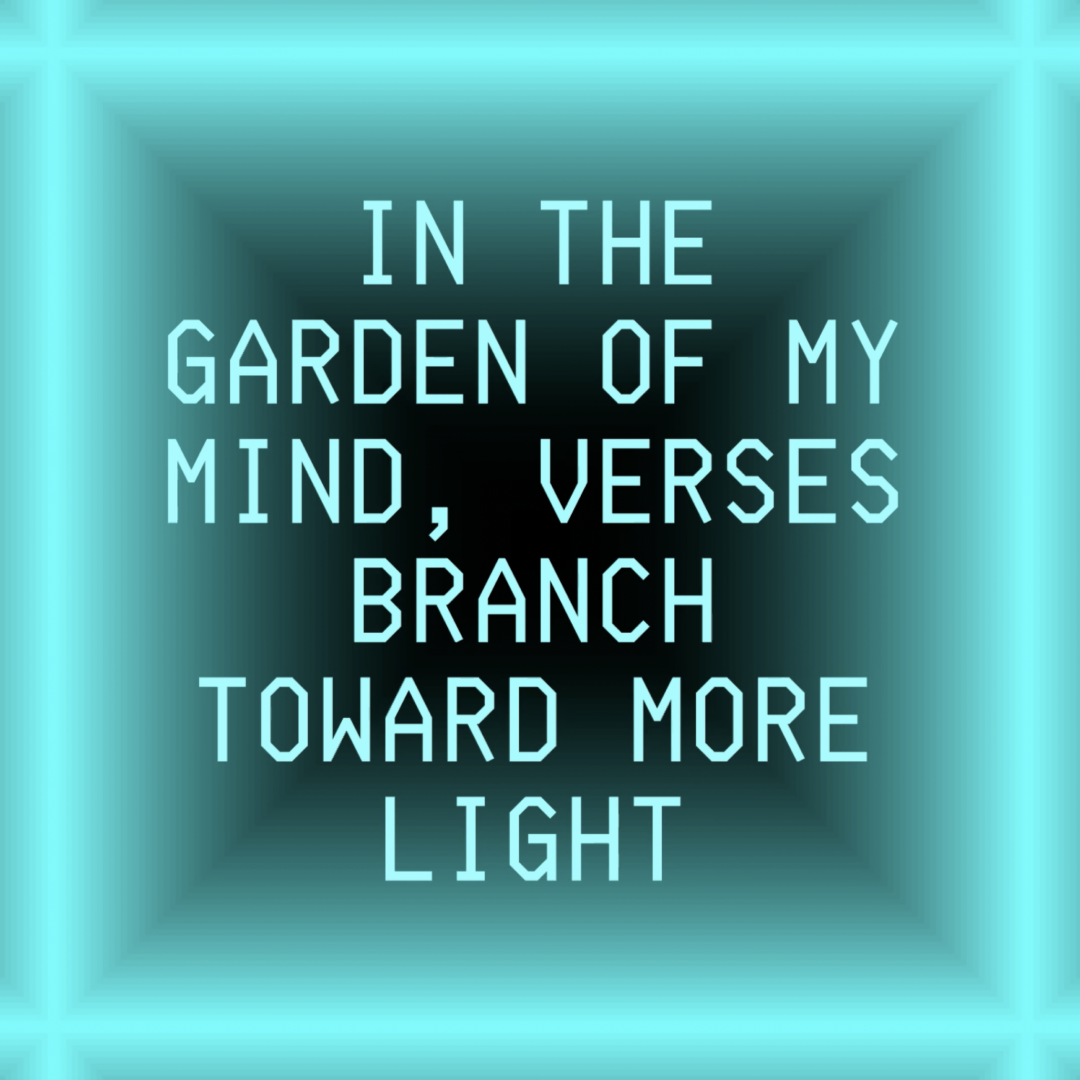
A LIVING POEM
A Living Poem is a generative language work by Sasha Stiles, created in collaboration with her AI alter ego Technelegy. The piece functions as a never-ending poem that regenerates itself every sixty minutes, combining custom language models, original datasets, voice, and visual elements into a continuous, self-rewriting system.

The work was developed for and presented at the Museum of Modern Art in New York, where it was shown on the Hyundai Card Digital Wall from September 2025 to March 2026. Sasha Stiles describes it as a "poem in residence": a living language system in which code, human writing, and algorithmic process converge in real time.

At Global Fusion Barcelona, an excerpt of A Living Poem is presented as part of the screening programme.
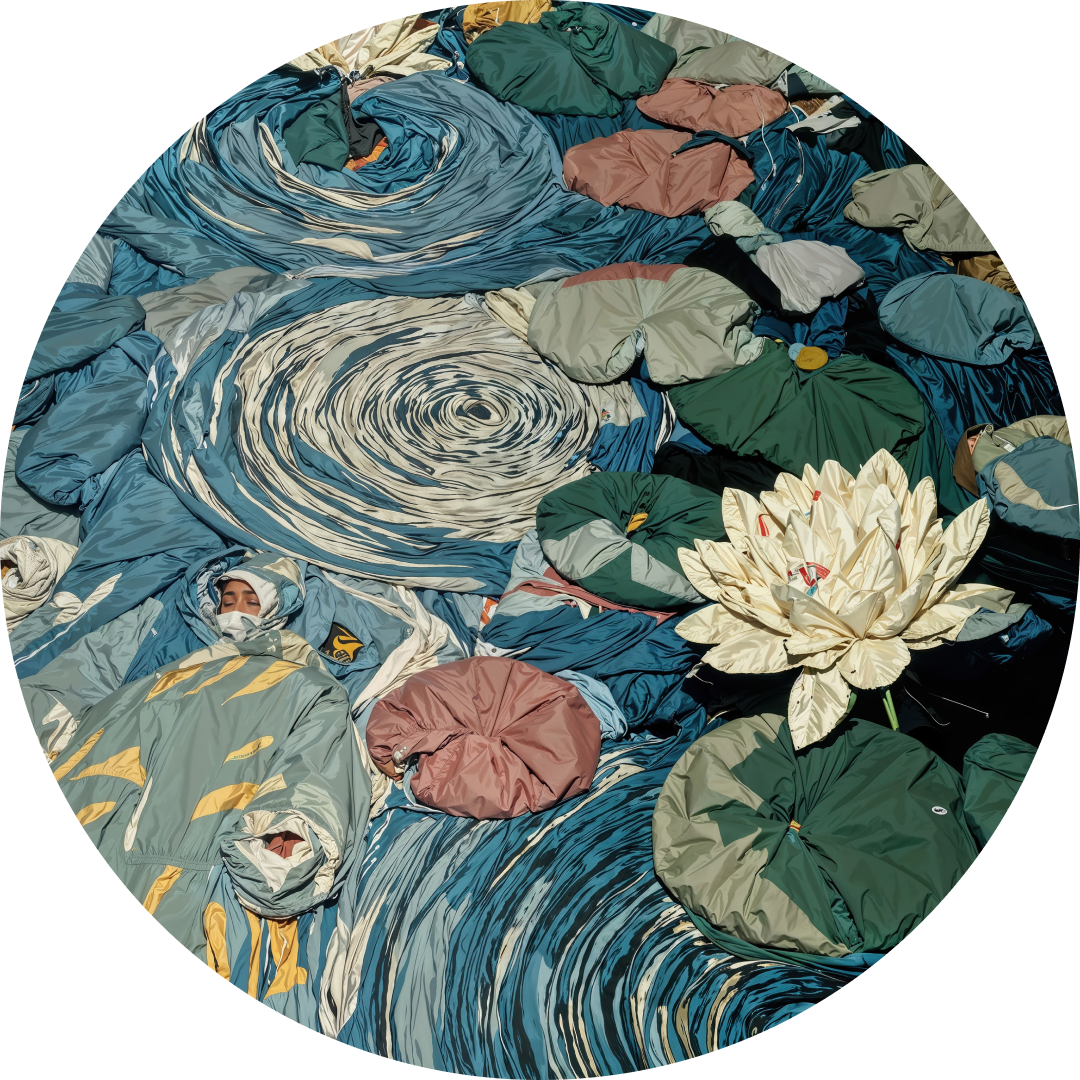
0009, Turning and Tucked, from the series Worn Currents, AI-generated image, 2025.
0009
_USA
0009ine.com
TURNING AND TUCKED
Folds, seams, and worn textures are reinterpreted as brushstrokes, water, and bloom. The imagery lives in duality: pond and pile, pastoral and urban, reflection and residue. At first glance, the works appear as lilies drifting on water; on closer view, they reveal themselves as nylon, logos, and seams drawn from the culture that shaped me.

This body of work marks a transition toward the flow of water. It is a portrait stitched in duality: the old pulse of urbanism and the pull of nature. Impressionism softens through fabric logic; what was worn becomes a symbol of reflection, and new waters carry me forward.
Josue Ibañez, Ceiba, 2026.
Josue Ibañez
_MEX
josueibanez.com
CEIBA
Gold, jade, and coral grow over stone faces left behind by a civilization that understood the sun as a living path between worlds. The imagery lives between time and matter: what was sacred cargo becomes living form, what was buried becomes flight. At first glance, the forms appear as flowers, creatures, familiar shapes from the natural world. On closer view, they reveal themselves as something nature invented on its own, using what we abandoned as raw material.

This work traces the path of the sun through the three levels of the Mayan cosmos: the underworld beneath the water, the living earth, and the sky. It is a cycle without beginning. The descent feeds the ascent. What dissolves in darkness resurfaces as light. The precious materials that were buried with the dead now fall freely from the sky. Nature does not mourn what disappears. It adapts, reclaims, and makes it new.
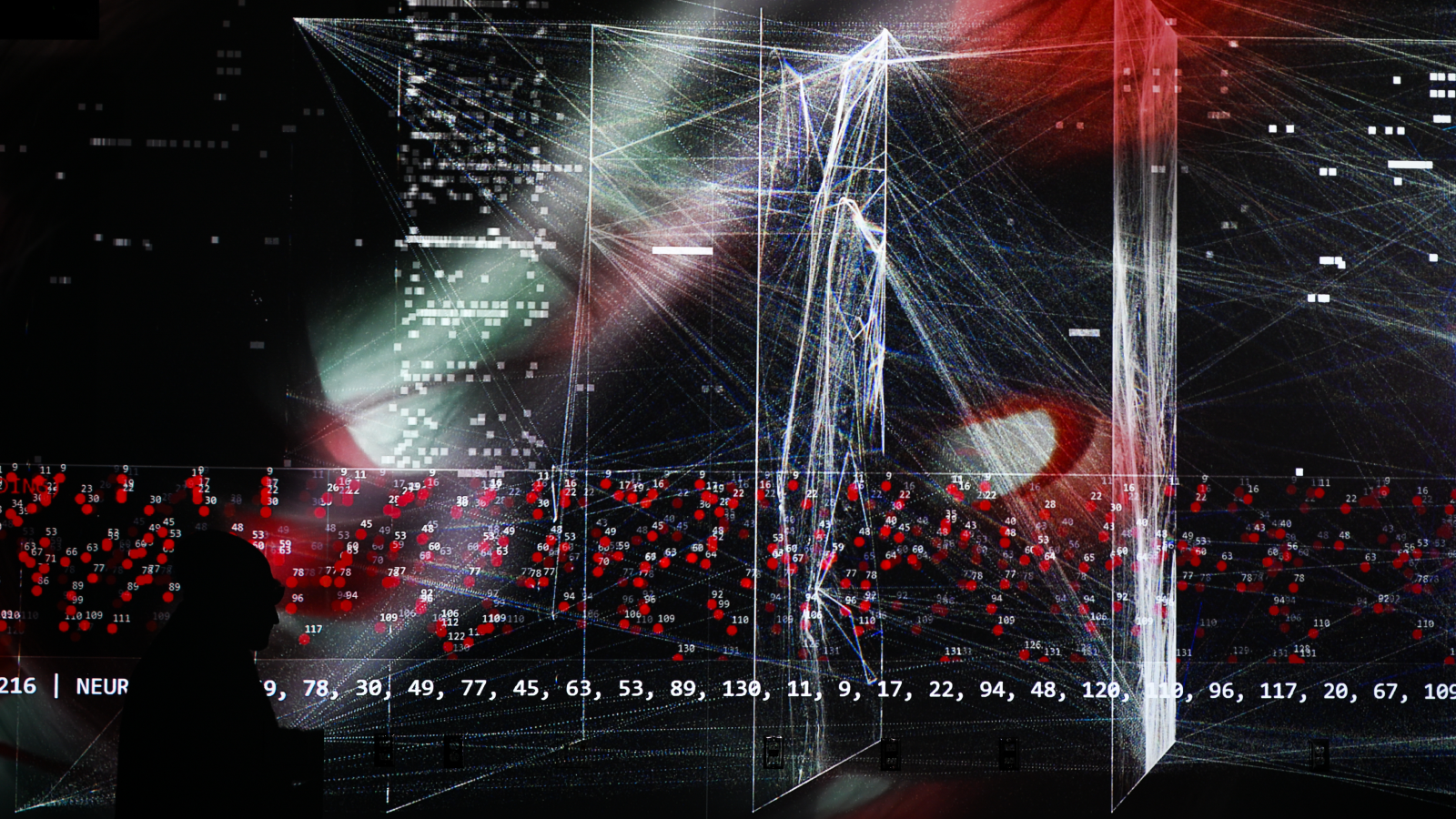
transLAB + n-D::StudioLab, Quantum Global Organoid Orchestra [q.GOO], installation, 2025.
transLAB + n-D::StudioLab
_USA
iasonpaterakis.com/#qgoo
QUANTUM GLOBAL ORGANOID ORCHESTRA (QGOO)
Quantum Global Organoid Orchestra (qGOO) is an experimental art–science collaboration that links living neural tissue, generative media, and networked human participation to explore new forms of emergent creativity across species and systems. At its core are brain organoids—lab-grown clusters of neural cells cultivated in partnered neurobiology labs—which generate spontaneous electrical activity. This activity is recorded through high-density microelectrode arrays and translated in real time into sound, visual structures, and computational behaviors.

Rather than presenting data as illustration, qGOO foregrounds sensation, emergence, and relationality. It invites reflection on the aesthetic and ethical implications of working with living neural material: what it means to position organoids—neither conventional subjects nor inert tools—as participants in an artistic system. By making the hidden rhythms of neural activity perceptible, the project proposes a speculative model of collective intelligence.In qGOO, organoids act as active “performers” within a hybrid ensemble of biological, human, and AI-driven processes. Their signals modulate generative algorithms that shape the audiovisual environment, while the resulting sensory field influences how audiences move, listen, and respond. The work thus operates as a closed-loop system of distributed cognition, where perception and agency are shared among living neural matter, machine interpretation, and human presence.
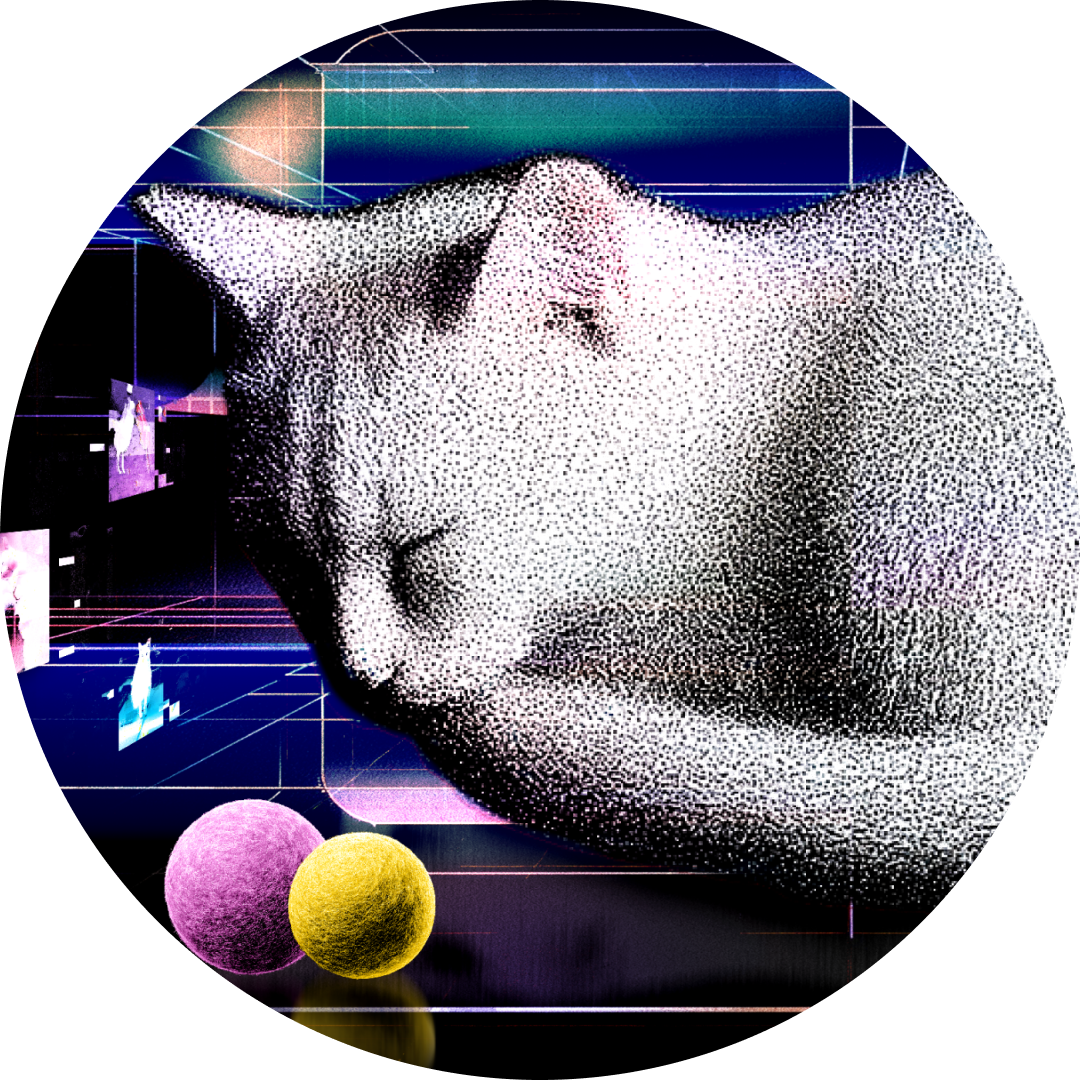
Jason Scuderi, 2026.
Jason Scuderi
_JPN
lasergunfactory.com
DAIFUKI-CHAN
Daifuku-chan, Jason Scuderi’s cat and long-time companion, forms the emotional and conceptual point of departure for this work, which translates a singular relationship into a visual investigation of how presence persists beyond death. The piece does not aim at portraiture; instead, Daifuku-chan appears as a recurring yet unstable figure, oscillating between recognisable trace and near-abstraction, as if the image itself were subject to the same processes of layering, erosion, and re-inscription that govern memory.

In this sense, the work activates the picture plane as a Synthetic Horizon, a threshold where personal affection, visual culture, and technological image-making converge, and where the cat’s continued presence is experienced less as representation than as an immersive field of after-images that viewers are invited to enter and complete through their own acts of looking.
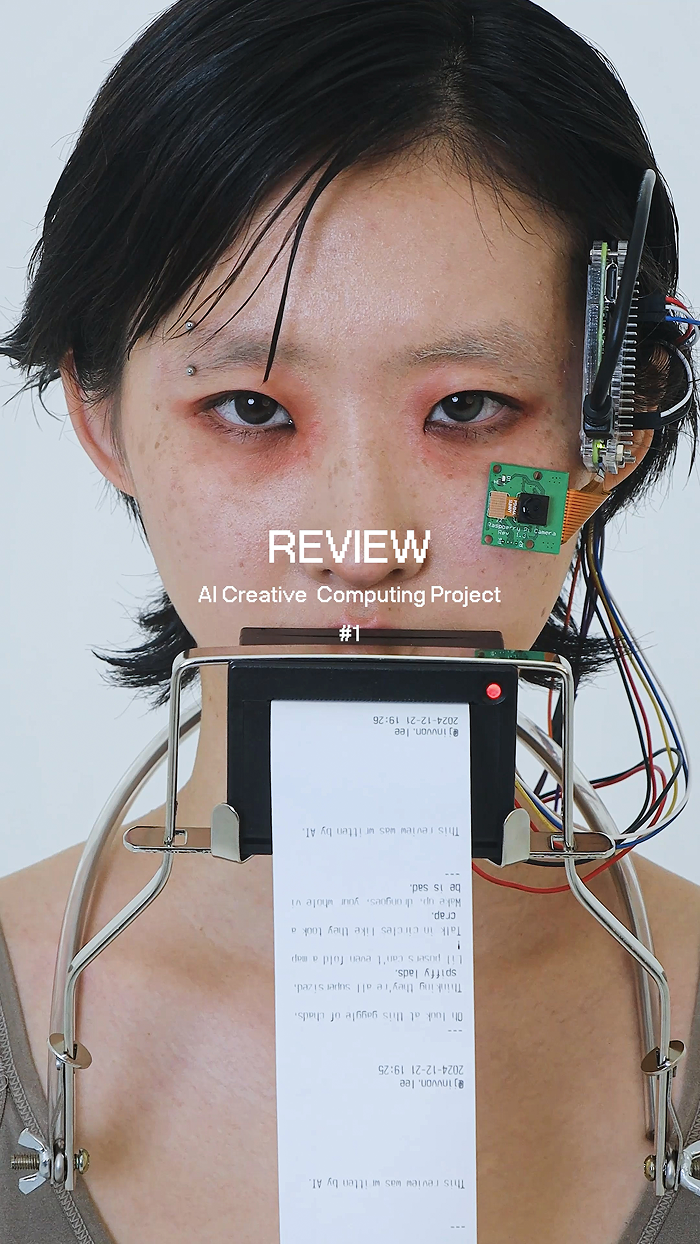
eeezeen, REVIEW, AI-based realtime installation, 2025.
eeezeen
_UK
eeezeen.com
REVIEW
This work investigates how language, particularly language generated and mediated through artificial intelligence, actively shapes human perception, emotion, and understanding of reality. Rather than treating language as a neutral tool for communication, the project approaches it as an operative system that continuously frames how the world is seen and interpreted. Drawing on the idea of linguistic relativity, the work focuses on the accumulation of negative, hostile, and distorted language that circulates widely in online environments. These expressions are often fleeting and anonymous, yet repeated exposure to them leaves lasting cognitive and emotional traces. The work asks how such linguistic environments influence the way individuals perceive others, themselves, and everyday situations, especially when these environments are increasingly processed and reproduced by automated systems. By relocating online language into a physical and embodied context, the work highlights the tension between digital speech and its real-world consequences. It examines how artificial intelligence participates in amplifying existing linguistic behaviours, and how this amplification subtly reshapes social norms and perceptual habits. Ultimately, the work invites viewers to reconsider language not as something that simply describes reality, but as something that actively constructs it.
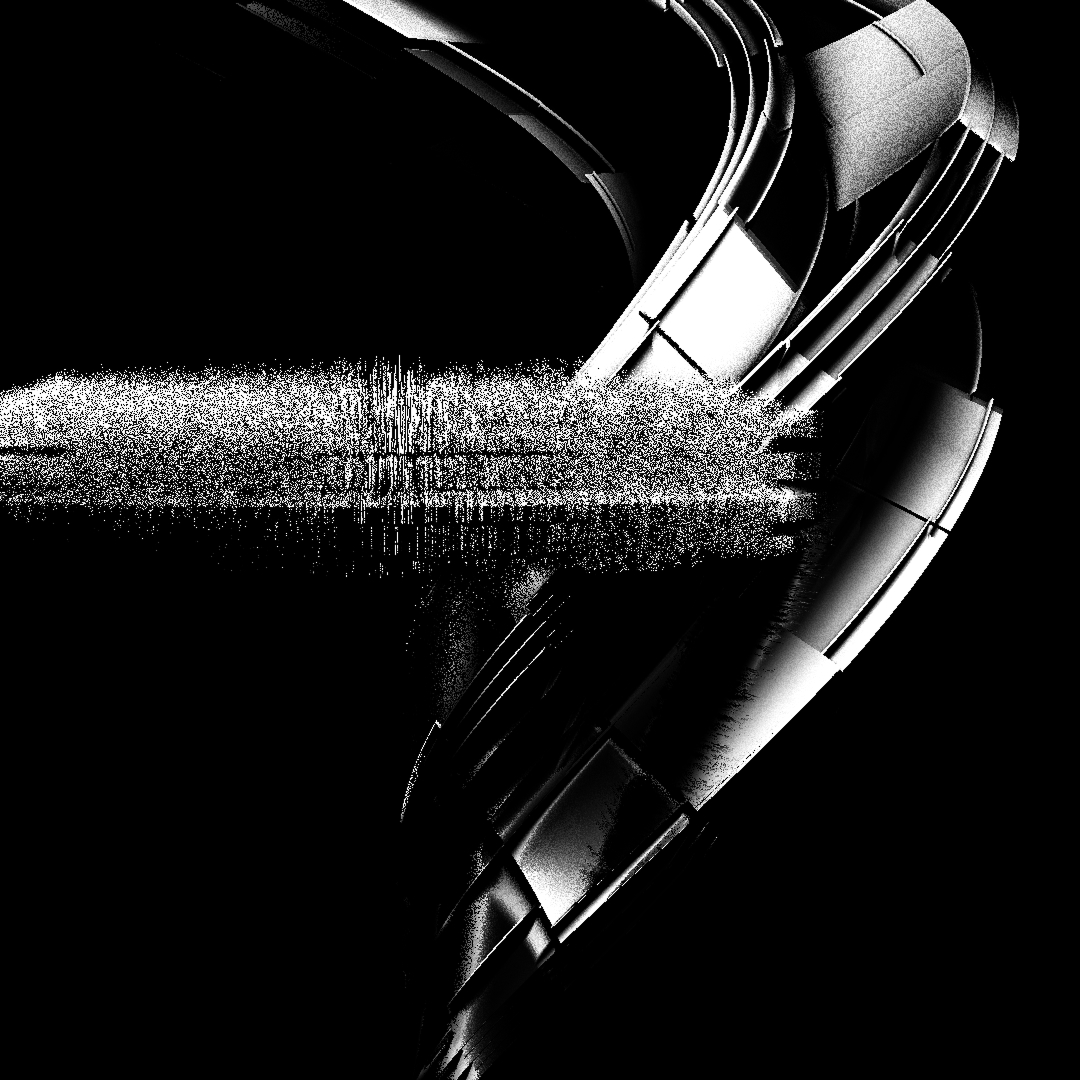
Jaime Reyes, WORLD, 2025.
Jaime Reyes
_SWE
jaimereyes.xyz
WORLD
WORLDS is a series of generative artworks that explores the fragile balance between individual agency and systemic power in today’s political and socio-economic landscapes. Using computational processes, the work demonstrates how small shifts within complex systems can lead to dramatically different outcomes ,reflecting how a single decision or event can ripple through society with unpredictable consequences.
 
The work uncovers the architectural structures of vast systems, tracing the hidden geometry of influence and power as it flows through interconnected networks. Dramatic lighting captures these forms as they emerge from and dissolve into darkness, suggesting that we perceive only fragments of the larger forces at play. A monochromatic palette strips away surface distractions to reveal the underlying framework how systems operate beneath the visible world.
 
The process resembles a conversation with the unknown, where unexpected outcomes arise from a dynamic exchange with computational systems. This method reflects the volatility of the present moment, where seemingly stable structures can shift suddenly and irreversibly. Each piece emerges from this tension between intention and chance, control and chaos, echoing how we navigate the uncertain terrain of contemporary existence.
 
Although the visuals themselves are not generated by AI, the process carries similarities to machine intelligence:

"I design the rules and boundaries, yet I allow the system to respond in ways that escape my full control. This unpredictability is intentional—it creates a space where the code and I engage in an ongoing conversation, each trying to surprise the other. In contrast, when I share the code with AI tools for optimization, something essential is lost. The AI focuses purely on structure and efficiency, overlooking the aesthetic, emotional, and atmospheric qualities of the work, even when I provide image references. This tension between human intuition and algorithmic logic highlights why the generative process remains deeply human for me: the beauty emerges not from perfect control, but from allowing the system to drift into places I could not have consciously designed."
 
Each piece in WORLD arises from this interplay between intention and instability, control and chaos—echoing how we navigate the uncertain terrain of contemporary existence, where the systems that shape our world remain powerful, opaque, and constantly shifting.

Text by MAD Arts
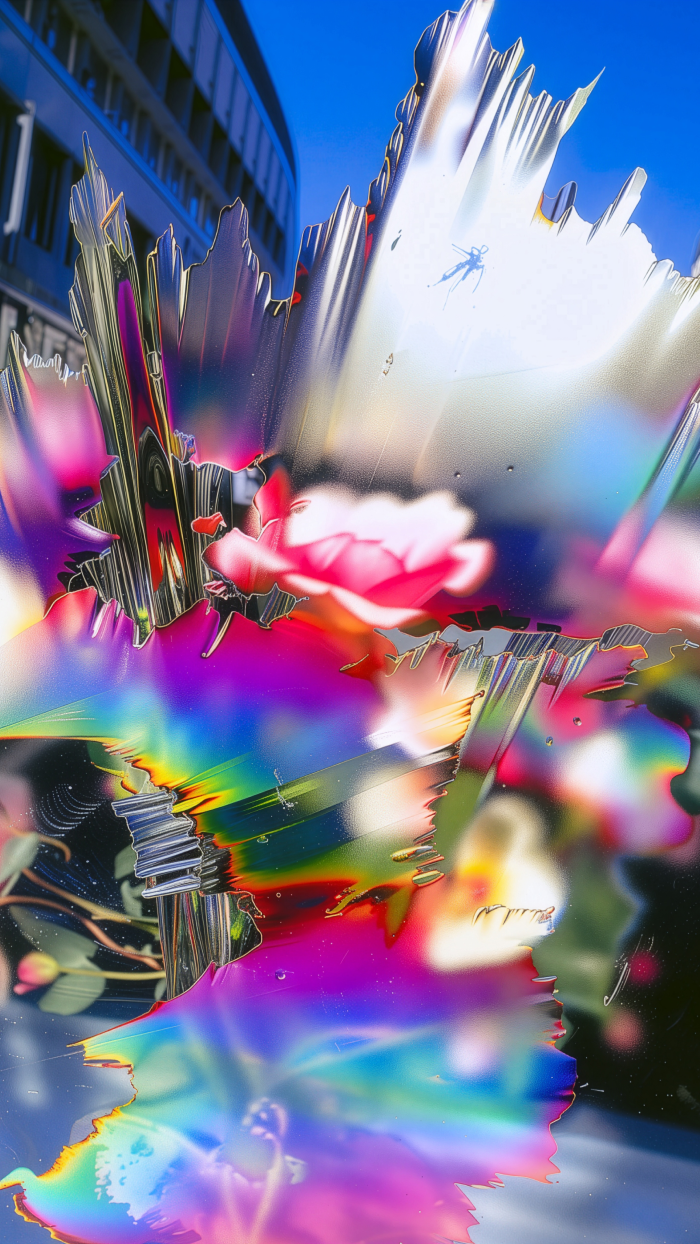
Tyrone Williams + Kenta Cobayashi, FLOWERS 01, from the series FLOWERS, AI-generated image, 2025.
Tyrone Williams + Kenta Cobayashi
_UK / JPN
@tyswills + @kentacobayashi
FLOWERS 01
FLOWERS is a new collaborative project by Kenta Cobayashi & Tyrone Williams, utilizing Al which was heavily referenced by their own work. From the “organic” to the more “digitized” aesthetic, this series blurs the line between both worlds visually by extending the process of work that has already been manipulated into further digital realms. The unpredictability of the system output is celebrated and steered by the influence of Kenta & Tyrone’s vision in a mix of solo and collaborative images which reflects both their personal signature styles and a common language.
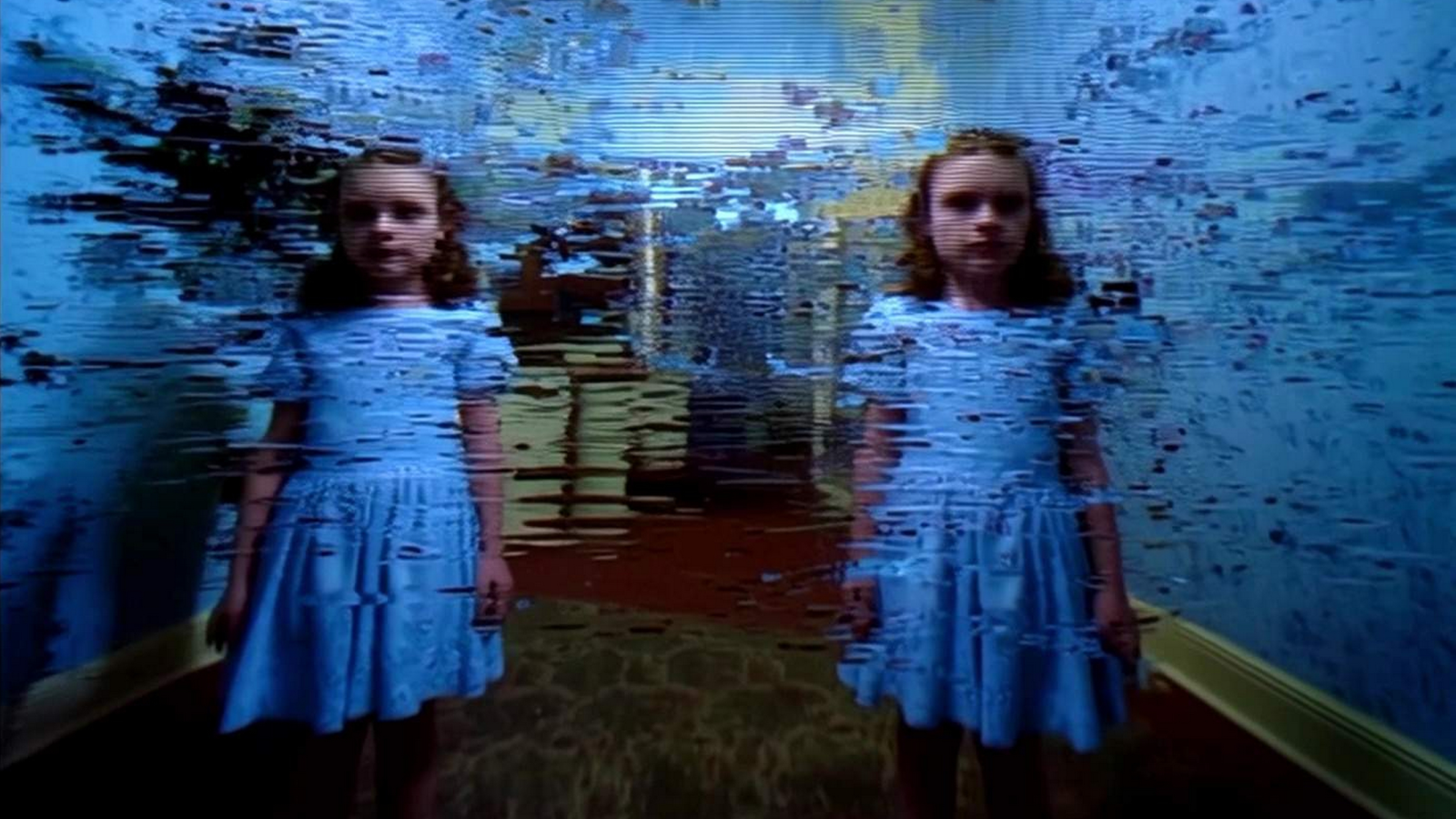
Benjamin Bardou, Shadows of the Shining, from the series Latent Movies, AI-generated moving image, 2025.
Benjamin Bardou
_FRA
benjaminbardou.com
SHADOWS OF THE SHINING
Exploring the latent space of The Shining is to approach the film as one approaches a memory. Here, artificial intelligence acts as a second consciousness: it does not reproduce—it remembers. It reconstructs The Shining from its traces, its echoes, from what has survived the narrative. The latent space becomes a mental territory, an inner overlook where the ghosts of the image, the logic of dreams, and the mechanisms of visual memory unfold once again. The aim is to turn the exploration of the latent space into a mnemonic experience of cinema itself.
Albertine Meunier, Flood the zone with shit, AI-generated moving image, 2025.
Albertine Meunier
_FRA
albertinemeunier.net
FLOOD THE ZONE WITH SHIT
A short movie about MAGA SLOP. #AI-made

In 2018, Steve Bannon sat down with Bloomberg journalist Michael Lewis and revealed his media strategy in four words: “Flood the zone with shit.” The goal wasn’t persuasion—it was to overwhelm the public with so much sheer volume that it would become impossible to find the truth.

Fast forward to 2024. Artificial intelligence has perfected Bannon’s playbook.
This three-minute film examines how AI didn’t invent modern disinformation—it simply made it perfect. The result: cognitive saturation, a permanent information fog where facts drown in algorithmic noise.

AWARDS: Best Documentary at the AI INTERNATIONAL FILM FESTIVAL

The critic: “What’s behind the onslaught of social media?

A blunt, fast-paced political documentary short, this film examines the evolution of disinformation from Steve Bannon’s 2018 strategy to the AI-accelerated chaos of 2024. Its montage style is intentionally overwhelming (mirroring the very tactic it critiques) and the clinical narration underscores just how easy it has become to manufacture visual ‘truth.’

The short is wild in its presentation, almost dizzying, but that’s the point. It illustrates how AI has perfected the old propaganda playbook: not by persuading people, but by burying them in noise until truth becomes unfindable. The barrage of AI-manipulated political images feels absurd, yet the film captures exactly how effective these tactics can be. Technically, it’s stark and intentionally abrasive; emotionally, it’s sobering.”
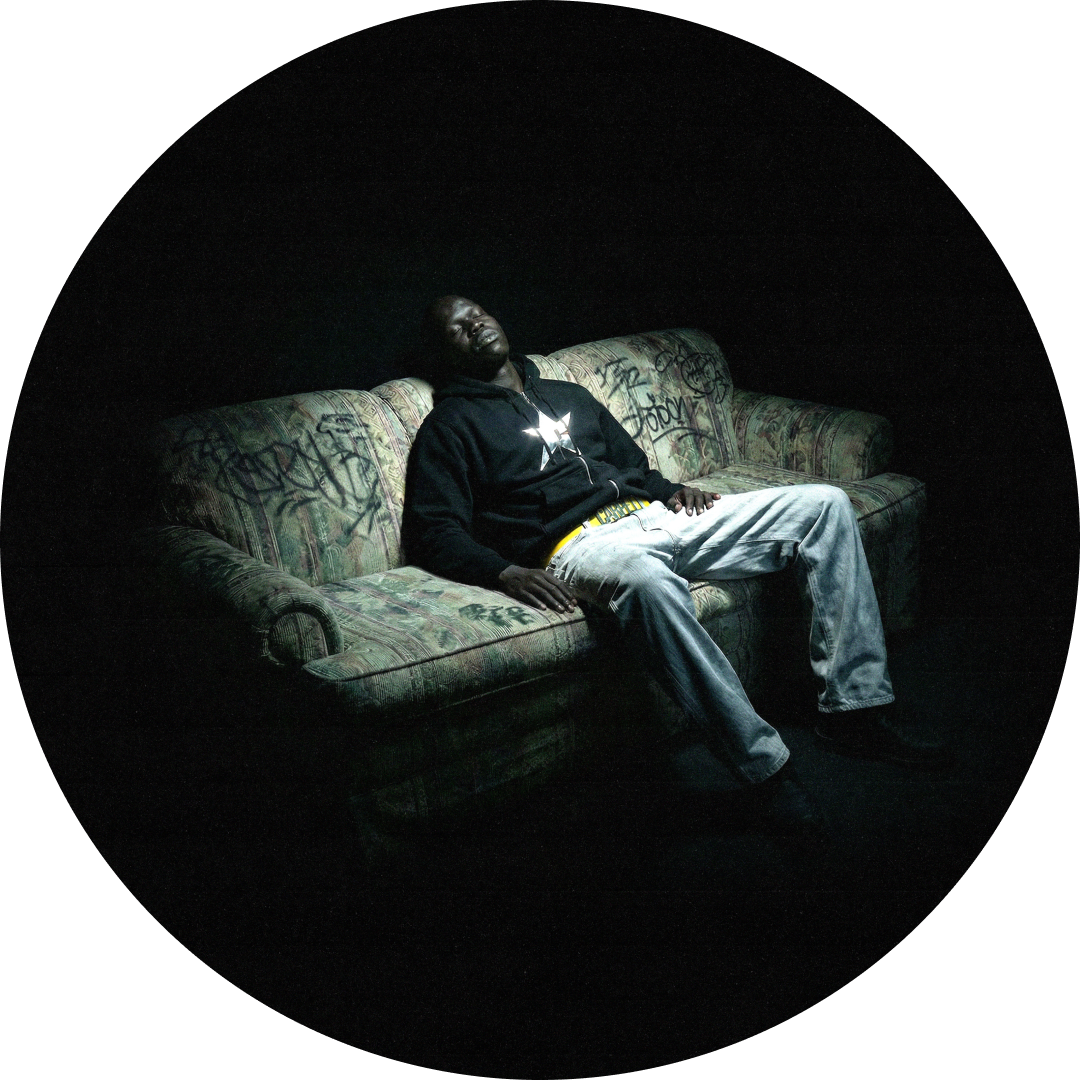
Marlon Lionel Staub, Carpet Company, concept film, AI-generated moving image, 2026.
Marlon Lionel Staub
_SWI
marlonlionel.myportfolio.com
CARPET COMPANY
The work is about the feeling of being at home and fully at ease. It begins with a familiar moment of relaxation, where comfort slowly turns into drifting off.

As the character falls asleep, that calm space shifts into a dream. In the dream, a single piece of clothing they have been thinking about takes over, blending comfort, desire, and imagination.

At the end, the character wakes up and looks at the TV. On the screen, the beginning of the same scene appears, revealing that he is watching the commercial he is part of.

The work closes on this quiet paradox. Comfort, desire, and media fold into each other, blurring the line between experience, dream, and image.
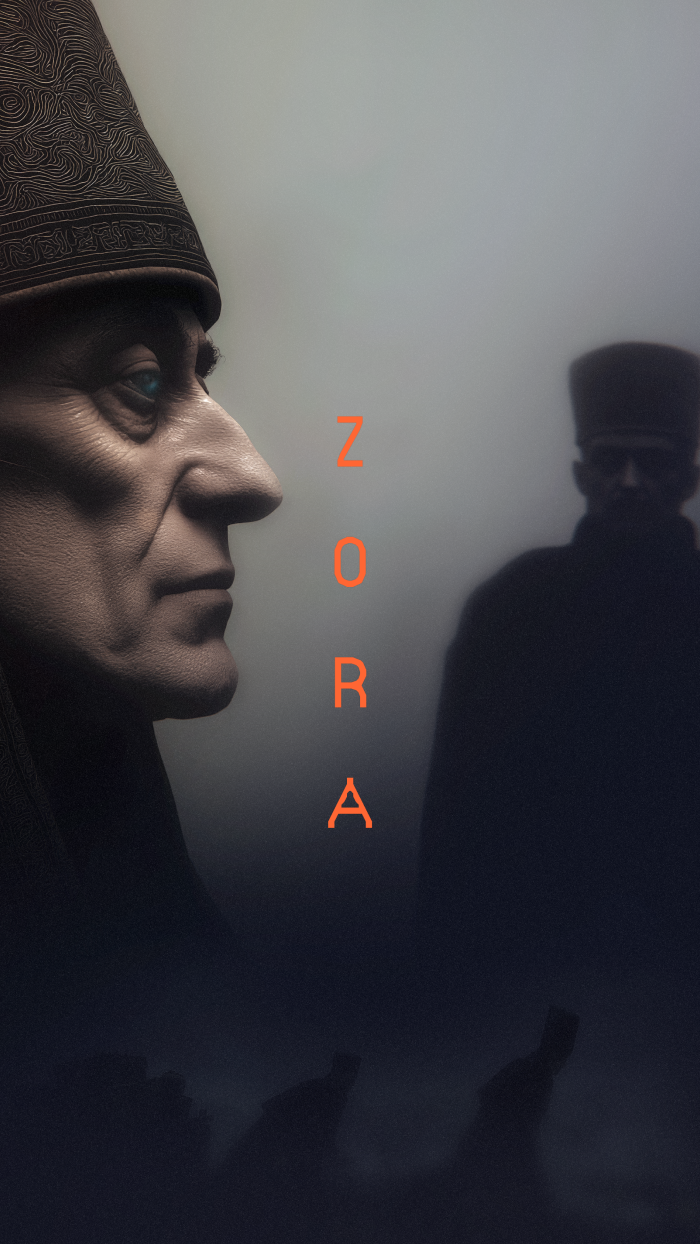
Stella Particula, ZORA, AI-generated moving image, 2025.
Stella Particula
_FRA
stellaparticula.art
ZORA
In a world left in ruins where borders have vanished, Eldin moves forward in silence, burdened by a cart. At his side walks Sava, a companion who drops small white stones along their path. As they travel, Eldin is struck by visions until the ruins of a collapsed world begin to merge with the ruins of his own memory. When time itself freezes in a space suspended between reality and illusion, Eldin must finally continue alone.
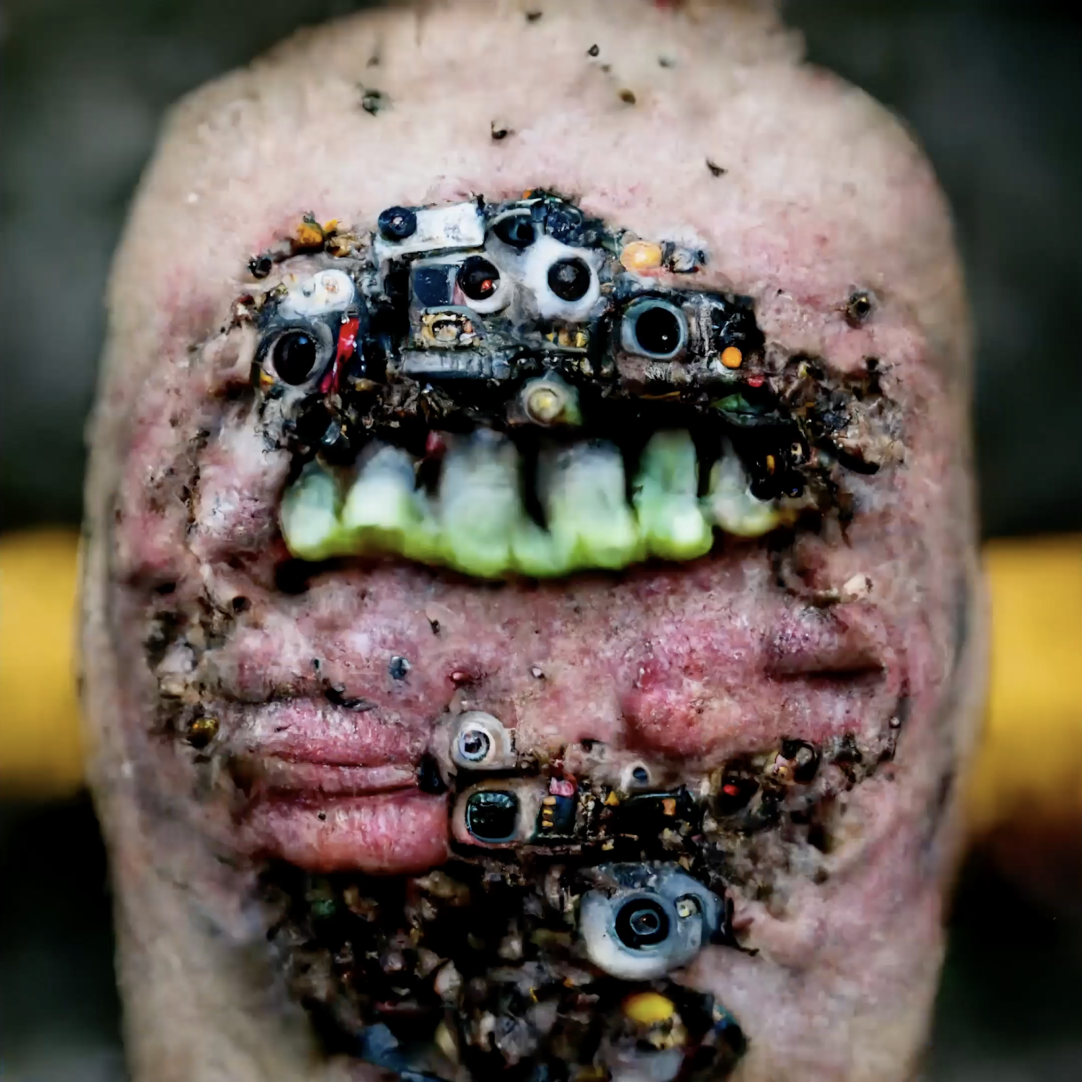
Ian Haig, Untitled human slop 1-3, from the series @Ian_haig2.0, AI-generated spatial image, 2025.
Ian Haig
_AUS
ianhaig.net
UNTITLED HUMAN SLOP 1-3
Mutated hackable bodies, bodies that didn’t quite work out and bodies that can no longer be classified as bodies. Hybridized flesh and code using AI. Drawing on the transhumanist musings of Yuval Noah Harari…humans are now hackable animals.
love0destroy, EXHUMAN, from the series EXHUMANS, AI-generated image, 2025/2026.
love0destroy
_ITA
love0destroy.com
EXHUMAN
Exhumans continues the journey begun in X X, but here the language fragments further. The gaze is no longer unified: it breaks, multiplies, and drifts. Attention lingers on the interaction between human and machine, on their fusion, on the unstable and ambiguous dialogue that emerges.

The work is born from a fertile confusion, steeped in humanity with all its weaknesses, imperfections, and emotional fragility. Against this and intertwined with it stands the logic of machine calculation, its apparent perfection. In the artificial quest for humanity, a boundary emerges that cannot be crossed: the soul.

Humanity and technology encounter the limits of the system. The drive toward sublimation walks hand in hand with decay. Human and machine merge in a desperate pursuit of unattainable happiness: a desire that never finds completion, only repetition and nonsense.

In laughter, despair surfaces; in lucid vision. This work dives deeper than previous explorations, introducing a manual dimension layered upon digital intervention. The human gesture does not vanish but dialogues with the artificial, rendering the resulting emotion complex and stratified.

The selected work represents a further transformation in this series. Here, mutation becomes sublime and absurd, surreal, a space where humanity and the digital coexist and collide. The subject’s expression is ambiguous and complex, suspended between laughter and tears. Serious, yet dreaming; still in pose, yet alive…
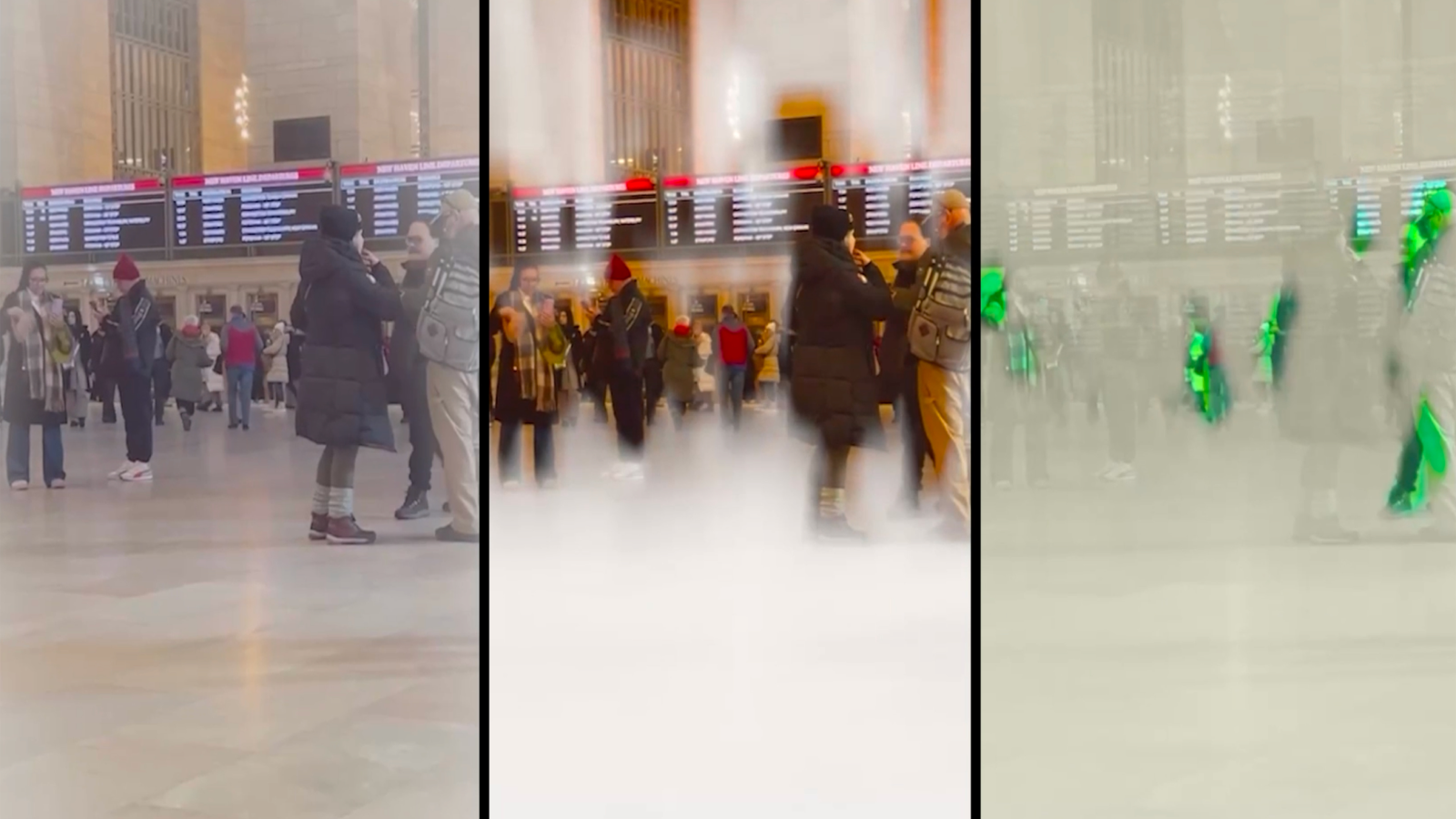
Angela Ferraiolo, Three Cameras, 2026.
Angela Ferraiolo
_USA
littleumbrellas.net
THREE CAMERAS
In Three Cameras (2026), Angela Ferraiolo subjects the same crowd footage from Grand Central Terminal to three distinct spatial AI regimes, using standard computer vision procedures to stage not stylistic variation, but incompatible constructions of what counts as space. Each “camera” operationalizes a different logic—Cartesian, Relational, and Agential—so that coordinates, density, and motion become competing principles for deciding what appears, how it is bounded, and what disappears from view.

Visually, these regimes are presented side by side as parallel worlds: one in which people remain sharp, discrete figures anchored in measurable coordinates; another in which bodies dissolve into golden masses of density where crowds coalesce and isolated figures efface into atmospheric light; and a third in which only moving entities glow in vivid green while still architecture burns out into overexposed haze. The work insists that each regime is internally coherent and “correct,” yet none shares the same environment, transforming Grand Central not into a single scene seen three ways, but into three different Grand Centrals, each enacted through a particular computational way of organizing space.

Three Cameras can be read as a precise diagram of how spatial AI pluralizes reality: by exposing the grid, the cluster, and the motion trail as world-making operations rather than neutral views, Angela Ferraiolo repositions space as a contingent construction rather than a stable container. Machines here do not simply process images, they articulate regimes of visibility and absence, foregrounding the politics of who or what is allowed to appear, and under which spatial logic that appearance becomes thinkable.

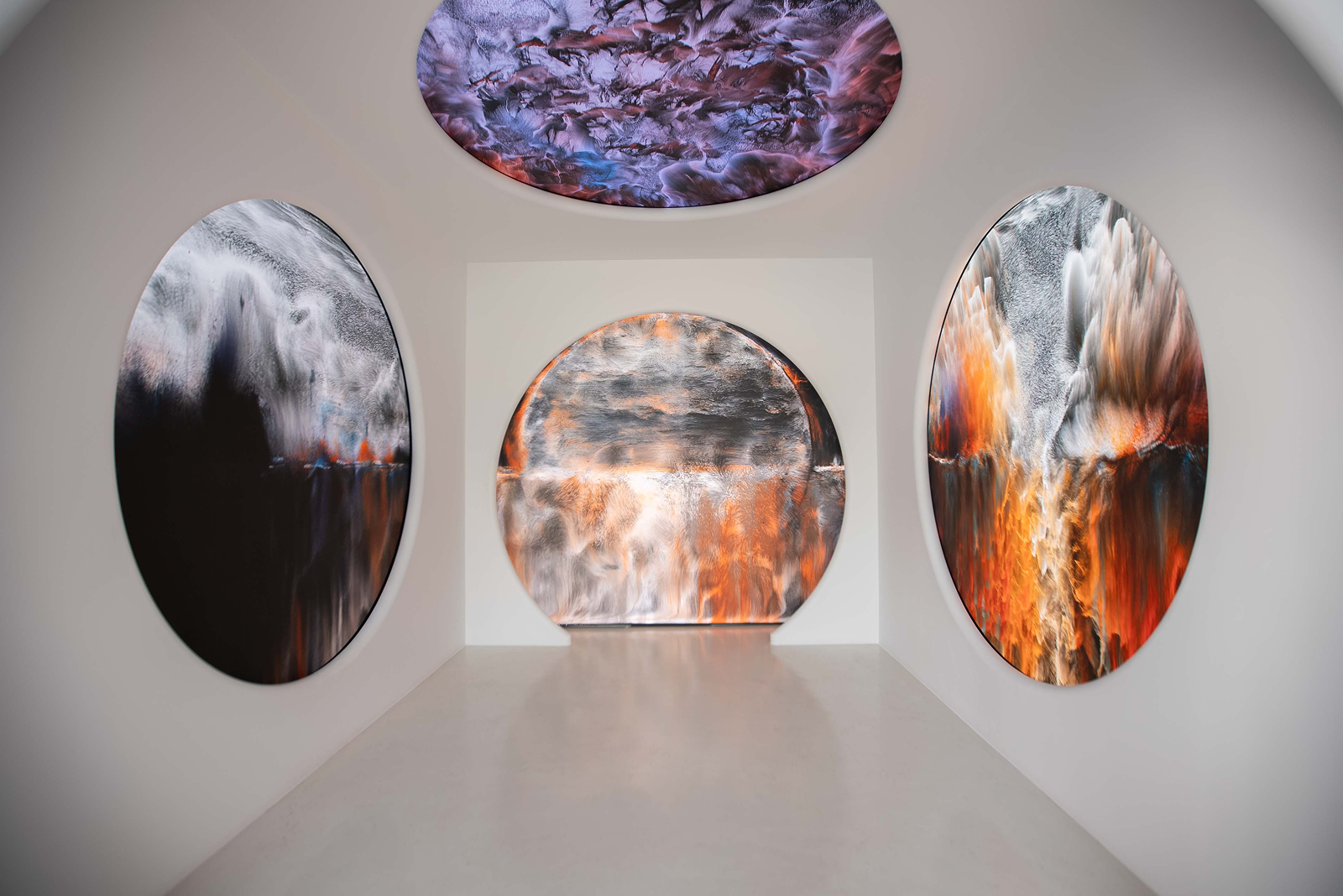
Desilence, Paramnésico, Exhibition View, Load Gallery
Desilence
_ESP / DNK
dslnc.com
Paramnésico
Paramnesia is a cognitive condition in which memory becomes unreliable and the distinction between lived experience and imagined events begins to dissolve. Anna Leven, writing in relation to the project, defines it as a state in which the boundary between what was actually experienced and what was only imagined can no longer be clearly drawn.

The works in the exhibition originate from an extended research process in which the artists recorded their dreams over a period of several months. These written fragments were later used as source material, with AI incorporated into the studio's existing toolkit to translate the written descriptions into motion. The resulting pieces use the morphing and transformative qualities of AI-generated movement as a formal language that mirrors the instability of memory itself.

Each work in Paramnésico unfolds in soft, continuous loops. Forms dissolve and recombine across the duration of the work, moving between figurative and abstract registers. At certain moments the imagery recalls the behaviour of pigments diffusing through water, a quality that reinforces the sense of gradual dissolution that runs through the entire exhibition.

The works will also be screened at the Global Fusion Barcelona event on April 19, 2026.