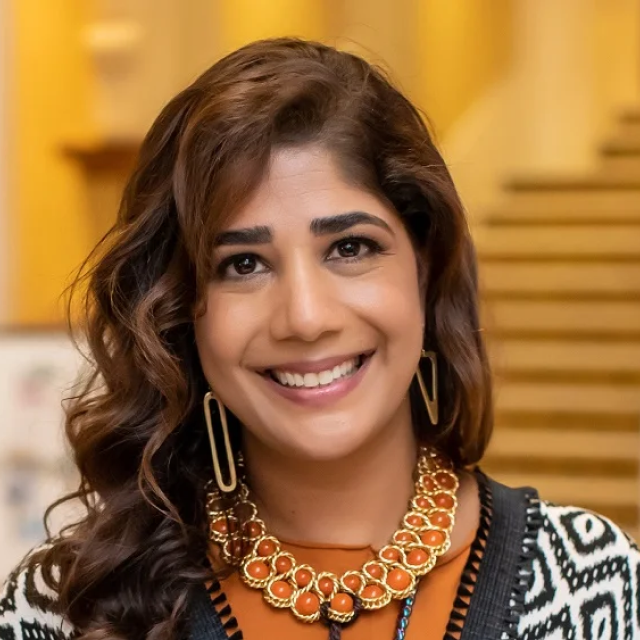
Simone Brauner. Does AI play a role in this part of your practice, and if so, how would you describe its place within the system you have built?
Amrita Sethi. Cats don’t make dogs. Humans made AI to replicate themselves—which means AI is not the beginning of something new. It is the continuation of something ancient. Humans are the original AI machines.
We are the sum of our present moments, our experiences, our conscious and subconscious impulses—but also the sum of what came before us. Every human being alive is running on training data that stretches back through generations. We did not choose our first language, our first images of beauty, our first understanding of what is sacred. We inherited them.
What we are now doing with AI is capturing that process explicitly for the first time. When someone types a prompt into an AI system, the specific words they choose, the images they reach for all of that is data about who they are. The machine is not just a tool. It is a form of collective self-portrait.
%201.png)
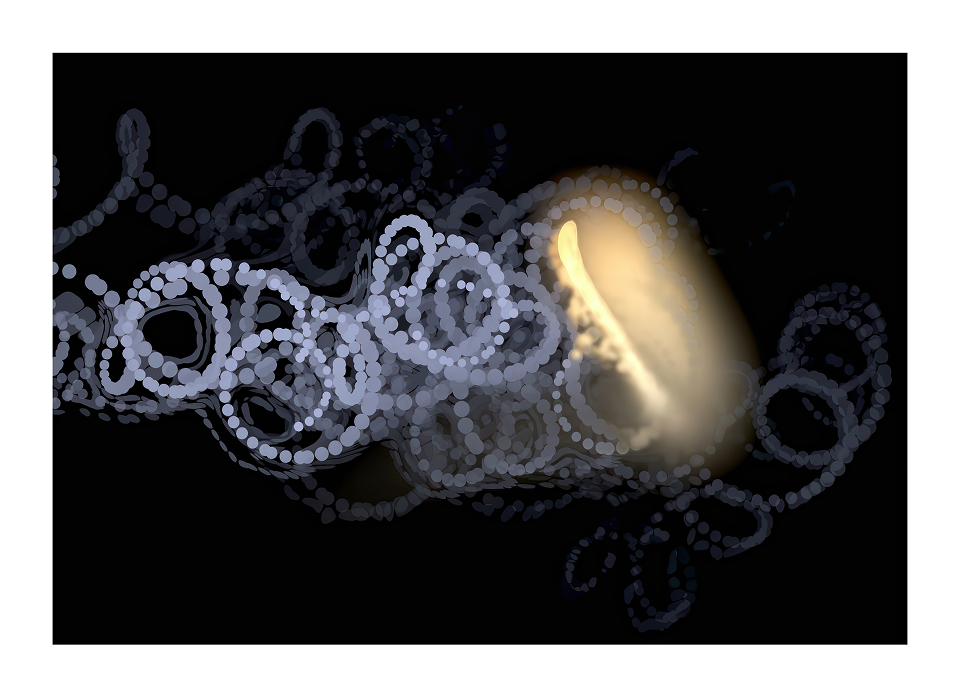
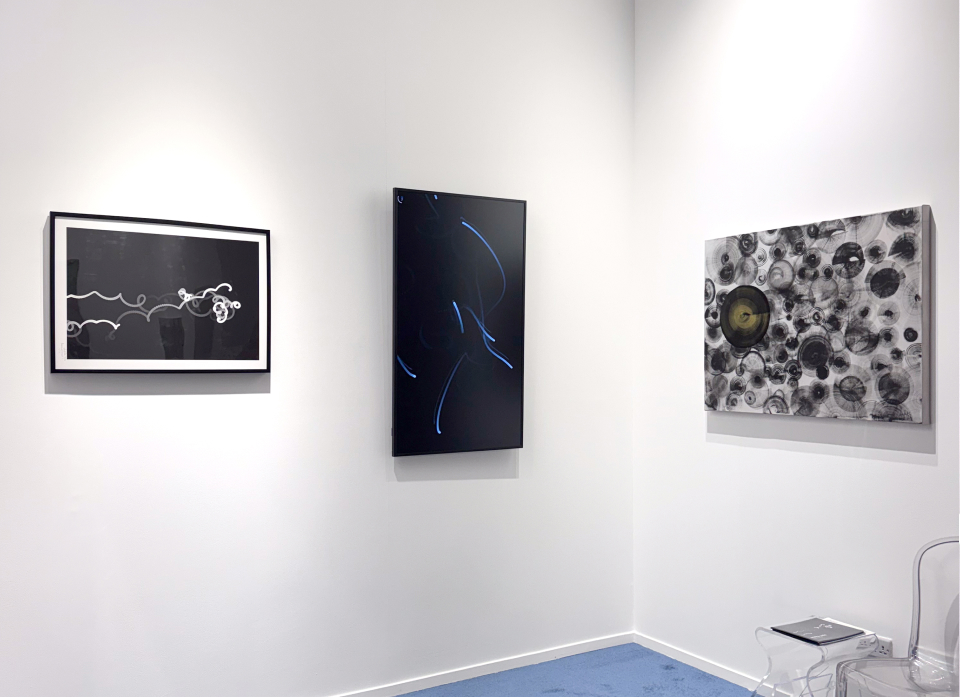
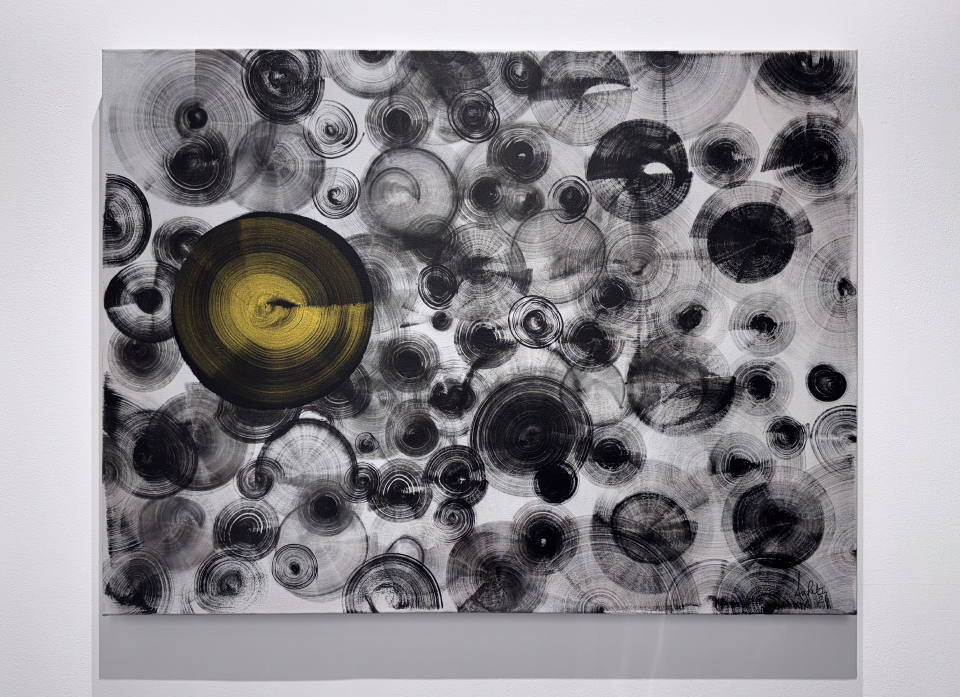
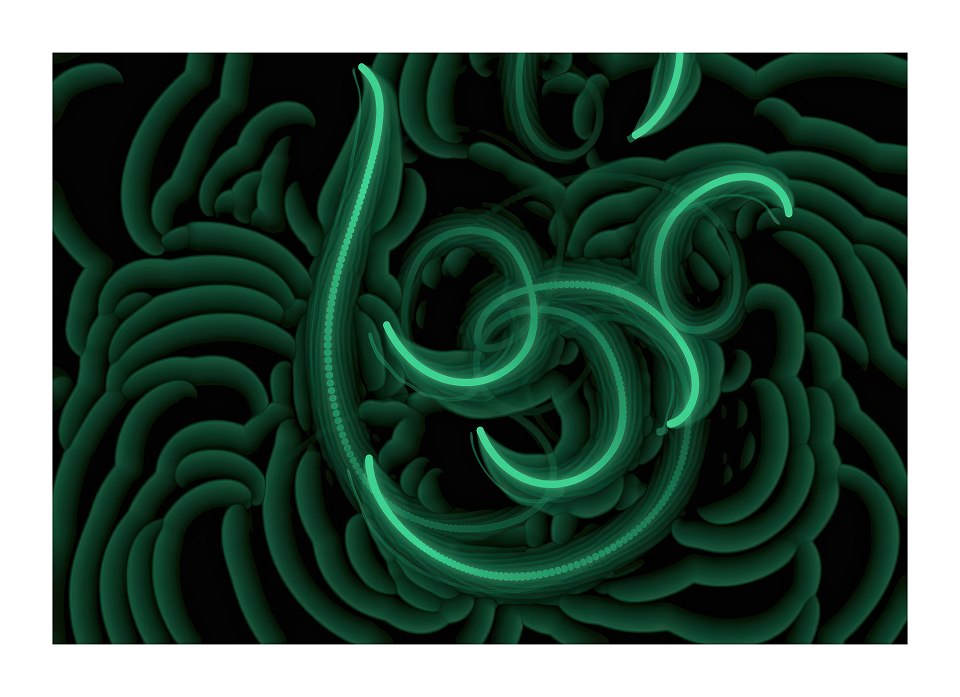
Amrita Sethi, Naissance de l’Onde — II, 2026
Amrita Sethi. This is why identity is at the centre of my practice. My first collection — A Word is Worth a Thousand Pictures — began from a simple observation: if you say one word to a hundred different people, you will get a hundred different images. Because every one of us is a different AI machine, operating on different learned experience, different inherited culture, different accumulated present moments.
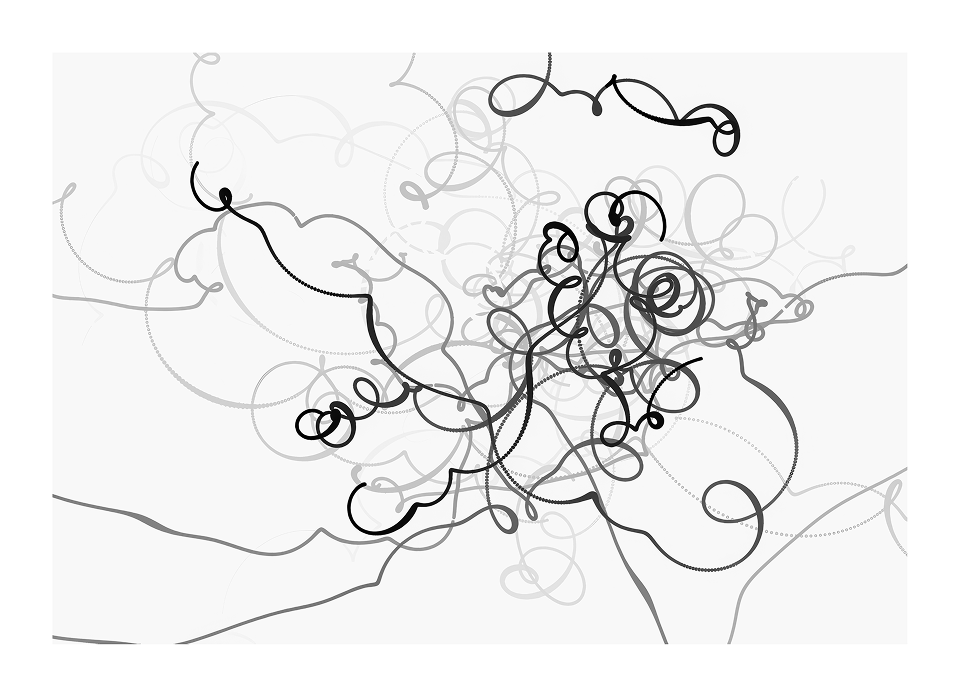
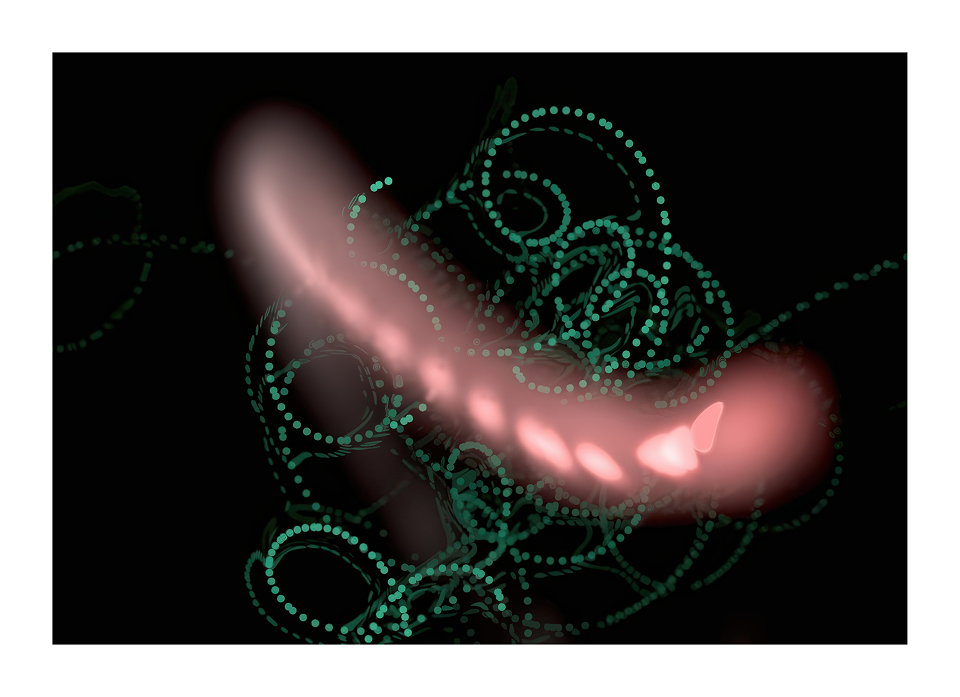
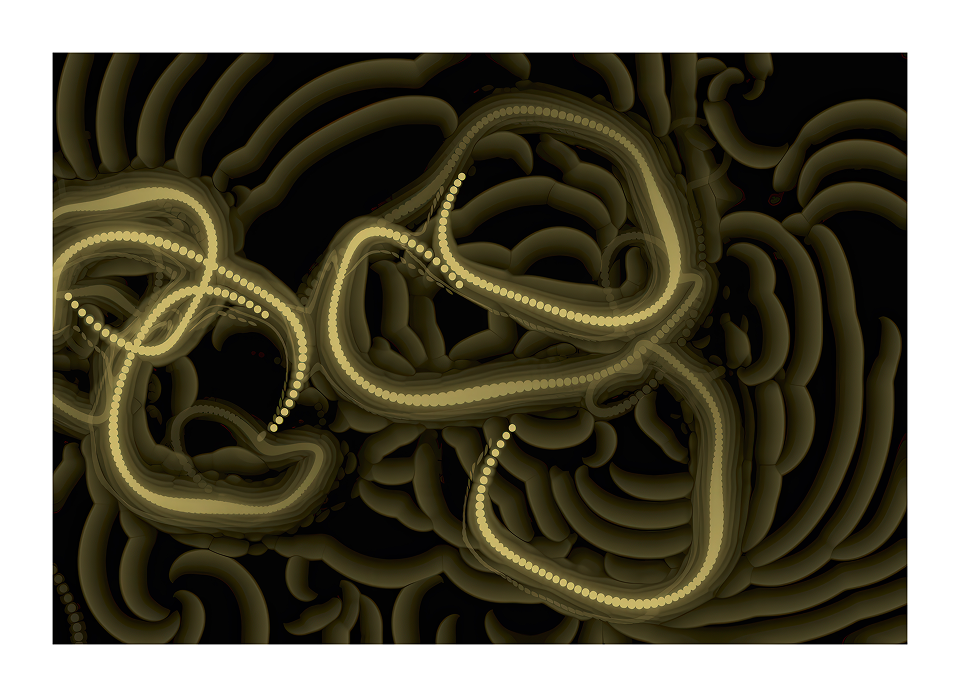
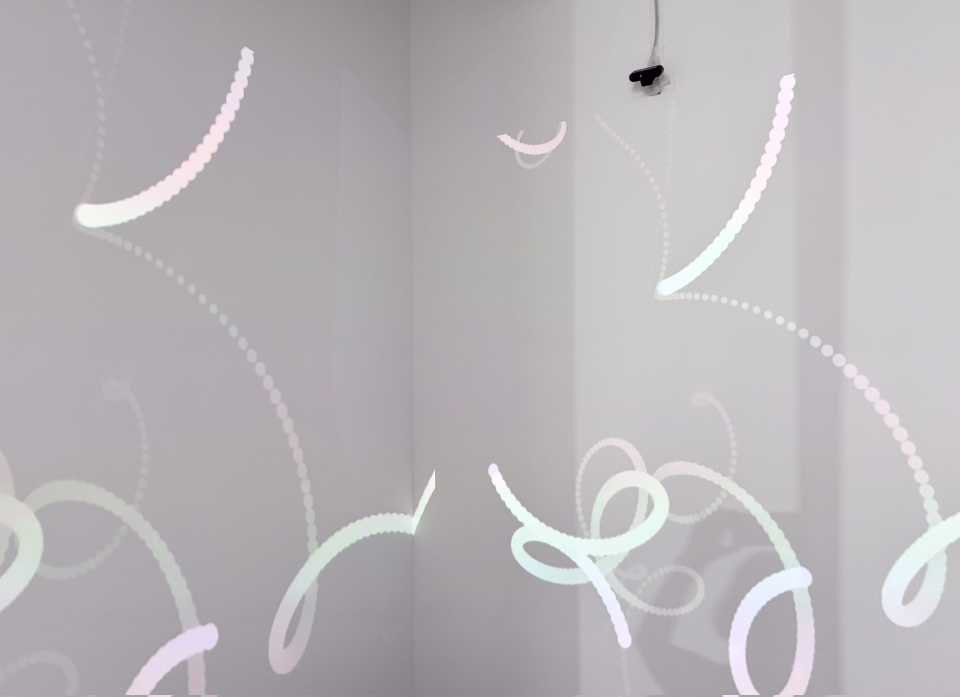
The installation is built in TouchDesigner, and its logic can be said in one sentence: the music moves the dot. There are no waves or lines drawn by hand. The frequency of the sonic movements shifts the dot—its position, its colour, its intensity. As the music builds, lines emerge not because I drew them but because the sound demanded them. Waves form as the physical consequence of intensity meeting time. Exactly how identity forms. Not by design. By accumulation.
Then I add movement. When people enter the space and dance or gesture, a second dot structure appears, generated entirely by their bodies. Two systems—sonic and kinetic — exist simultaneously in the same visual field, each generating its own geometry, each influencing the other. The room becomes a drawing instrument.
What AI makes possible is the next step: programming it to collect data from real-time movement and feed it back into the system continuously, so the installation builds a memory of the room. Over four days at Art Dubai, the work would become something different on the final afternoon than it was on the first morning—shaped by every body that passed through it.
I am a Swiss-Kenyan-Indian-British artist living in Dubai. I had no conventional musical training. AI gave me access to a creative capacity I would otherwise have been locked out of. And I think that is the most important thing AI is doing right now—not replacing human creativity but returning it to people who were told they were not creative. We are all creative beings. The question was never whether. The question was access.